
Skinny Is Back — and We Need to Talk About It
GLP-1s, the fashion pendulum, and the quiet return of "thin"
In the space of about three years, the culture has swung from body positivity to something that looks a lot like the old thin ideal in new clothing. A big part of that story is a class of genuinely brilliant medicines — GLP-1s — being actively absorbed into an old, harmful set of beauty rules. As a doctor, I recognise how, for the right patient, this subset of medications can vastly improve their health. But when prescribed inappropriately, they can be something much more sinister.
First, the medicine
Let me start with something that feels almost strange to say out loud: the drugs are good.
I mean it. The GLP-1 medicines — semaglutide (you'll know it as Ozempic or Wegovy), tirzepatide (Mounjaro) — are one of the most significant advances in metabolic medicine in a generation. So before we get anywhere near red carpets and TikTok, I want to be clear. This piece is not an anti-Ozempic piece. It's a "please can we separate the medicine from the mania" piece.
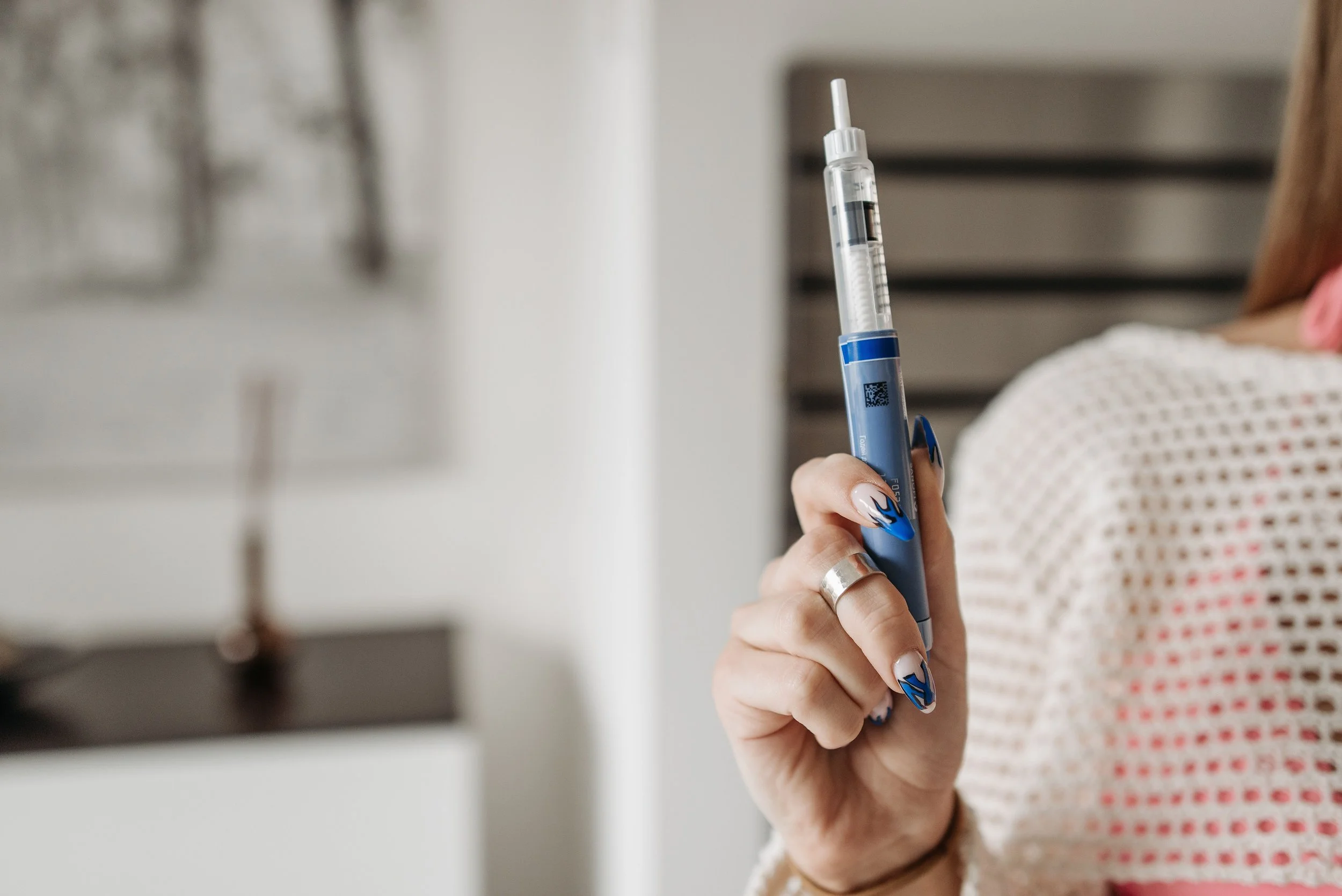
So how do they work?
GLP-1 receptor agonists work by mimicking the gut hormones your body releases after a meal. They deaden appetite, slow the stomach's emptying, and improve the way the body handles blood sugar. Tirzepatide adds a second hormone target (GIP) to the same idea. The upshot is that, for the first time, we have medications that produce weight loss in the range we used to think required surgery.
The numbers are genuinely striking. In the STEP-1 trial, semaglutide produced an average weight loss of around 15% of body weight; in SURMOUNT-1, tirzepatide reached up to roughly 21–22%. But this was never really about the number on the scale. In 2023, the landmark SELECT trial followed more than 17,000 people who were overweight or obese and had heart disease but not diabetes, and found that semaglutide cut the risk of major cardiovascular events — heart attack, stroke, cardiovascular death — by 20%. That is a colossal result. We are talking about preventing heart attacks. GLP-1s are also transforming type 2 diabetes care and showing benefit in sleep apnoea, kidney disease and fatty liver disease.
Here's the framing that matters: obesity is a chronic, relapsing medical condition driven by biology, environment and genetics — not a failure of willpower or character. For decades we told people to just eat less and move more, watched that fail for most of them (because that's what the biology does), and then blamed them for the failure. GLP-1s, used properly and under medical supervision, are a legitimate, often life-changing treatment. For a lot of people they have meant mobility back, diabetes reversed, joints unburdened, years added. Anyone sneering at that has not sat across from the patient whose life it changed.
So: the medicine is not the villain here. Keep hold of that as we walk into the messier bit.
The pendulum has swung — and you can feel it

Because at the same time all that good medicine was arriving, something else was happening in the culture. Slowly, then all at once, thin came back.
If you're in your thirties or older, you remember the arc. The 2010s brought a hard-won pushback against the heroin-chic era — body positivity, size inclusivity, brands finally putting a range of bodies in their campaigns, the idea (radical, apparently) that you did not owe anyone thinness. It was imperfect and often commercialised, but it moved the needle.
And then the needle moved back. Runway samples got smaller again. Red carpets got noticeably leaner. The tabloid "snapback" returned, this time supercharged. In 2022 a newspaper cover cheerfully announced that "heroin chic" was back and the internet, rightly, lost its temper. By 2024 the editor of British Vogue was publicly voicing concern about the return of the skinny model. Thinness stopped being one look among many and slid back towards being the default — and, increasingly, a status symbol: a signal that you have the access, the money and the discipline to be small.
GLP-1s didn't invent this. Fashion's pendulum has always swung, and the machinery that profits from women's insecurity never actually left. But the drugs poured petrol on it. Suddenly there was a fast, visible, aspirational route back to the old ideal — and the culture grabbed it with both hands. As commentators at Stanford's Clayman Institute have argued, the risk is that these medicines get weaponised — used to relaunch the moral judgment that a smaller body is a better, more virtuous body. That's the bit that undoes twenty years of progress. Not the drug, but the story we're wrapping around it.
Where this lands in my world
This is the point where it becomes my actual clinical business, not just commentary.
Rapid, significant weight loss changes the face and body in ways people don't anticipate. "Ozempic face" is a real phenomenon: when you lose fat quickly, you lose it from the face too, and the result can be a hollowed, deflated, prematurely aged look — the volume that read as youth simply going. Skin that once had fat beneath it can become lax. And that sends people to clinics like mine, often distressed, wanting to understand what happened and what can help.
It also means aesthetic practitioners are now treating a genuinely different patient. The old instinct — chase the hollow with filler, replace volume like-for-like — can go badly wrong in someone mid-GLP-1 journey, whose face is still changing and whose tissues have less support. It calls for conservative, structural thinking, often favouring biostimulators and restraint over volume. This is new enough that it genuinely needs teaching, and I'd point any practitioner reading this towards proper, dedicated education on it.
Thin is not the same as well
Now the compassionate warning, and I'm saying this as someone who respects the medicine.
A drug being excellent for the right person does not make it right for everyone who wants to be smaller. A few things I want on the record:
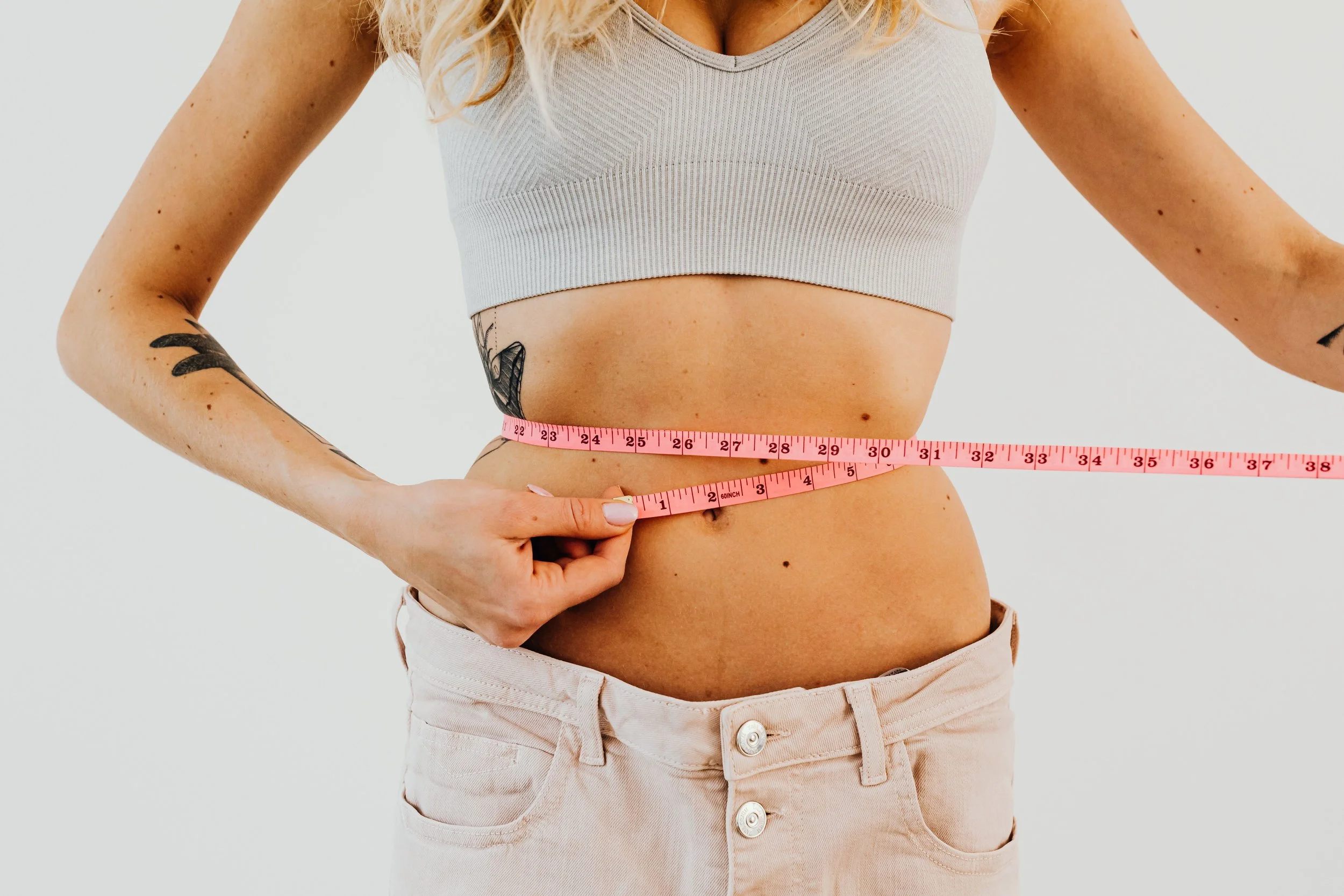
Not all of the weight lost is fat. A meaningful share can be muscle and lean tissue, which is why supervision, adequate protein and resistance training matter — losing weight is not the same as gaining health, and a frailer, sarcopenic small body is not a win. The effect is also largely dependent on continuing the medication; when people stop, much of the weight tends to return, which is exactly what you'd expect from treating a chronic condition, but not what the "quick fix" narrative promises. These medicines belong in a supervised, holistic plan — not bought unbranded off an Instagram DM, and not micro-dosed by people at a healthy weight chasing an aesthetic.
And here is my biggest worry. When a culture re-enshrines thinness as the goal, and simultaneously hands out a powerful appetite-suppressing drug, the people most in danger are those already vulnerable to disordered eating. A medication that is health-giving for one person can be a dangerous accelerant for another. If any of this stirs something uncomfortable in you — if your relationship with food or your body feels frightening rather than free — please treat that as important. In the UK, the eating disorder charity Beat (beateatingdisorders.org.uk) has a helpline, and it is a good, kind place to start.
The bottom line
Thin is back — not because it was ever a good idea, but because the pendulum swung and a remarkable new medicine happened to arrive at the exact moment the culture wanted an excuse. My job, and I'd argue all of ours, is to keep the two apart: to celebrate GLP-1s for the lives they genuinely improve, to treat the people changed by them with skill and kindness, and to stay wide awake to a beauty standard trying to sneak back in wearing a lab coat.
Use the medicine where it heals. Refuse the ideology that comes bundled with it. And be very suspicious of anyone selling you smallness as the same thing as health — they are not, and never were, the same thing.
References
Lincoff AM, Brown-Frandsen K, Colhoun HM, et al. Semaglutide and cardiovascular outcomes in obesity without diabetes (SELECT). N Engl J Med. 2023;389:2221–2232. Available from: https://pubmed.ncbi.nlm.nih.gov/37952131/
American College of Cardiology. SELECT trial summary — semaglutide effects on cardiovascular outcomes in people with overweight or obesity [Internet]. 2023. Available from: https://www.acc.org/latest-in-cardiology/clinical-trials/2023/11/09/15/04/select
Wilding JPH, Batterham RL, Calanna S, et al. Once-weekly semaglutide in adults with overweight or obesity (STEP-1). N Engl J Med. 2021;384:989–1002.
Jastreboff AM, Aronne LJ, Ahmad NN, et al. Tirzepatide once weekly for the treatment of obesity (SURMOUNT-1). N Engl J Med. 2022;387:205–216.
Wilding JPH, Batterham RL, Davies M, et al. Weight regain and cardiometabolic effects after withdrawal of semaglutide (STEP-1 extension). Diabetes Obes Metab. 2022;24:1553–1564.
National Institute for Health and Care Excellence (NICE). Guidance on semaglutide and tirzepatide for managing overweight and obesity [Internet]. Available from: https://www.nice.org.uk/guidance/ta1026
Stanford University, Clayman Institute for Gender Research. New weight-loss drugs meet old biases against fatness — challenging recent gains in body positivity [Internet]. Available from: https://gender.stanford.edu/news/new-weight-loss-drugs-meet-old-biases-against-fatness-challenging-recent-gains-body-positivity
Ozempic's influence: British Vogue editor voices concern over the skinny-model trend [Internet]. 2024. Available from: https://www.malaymail.com/amp/news/life/2024/11/15/ozempics-influence-british-vogue-editor-voices-concern-over-skinny-model-trend/156869
Acquisition Aesthetics. GLP-1 Weight Loss & Aesthetic Integration — training for medical practitioners [Internet]. Available from: https://www.acquisitionaesthetics.co.uk/glp-1-weight-loss/
Beat (Beat Eating Disorders) — UK eating disorder charity and helpline [Internet]. Available from: https://www.beateatingdisorders.org.uk/

A tech millionaire spends two million dollars a year, swallows dozens of pills a day, and once had his teenage son's blood pumped into his veins — all to avoid dying. It's a mesmerising spectacle. It's also, for almost everything that matters, a very expensive way of ignoring what we already know. Because the real longevity "hacks" are unglamorous, unpatentable, and backed by mountains of actual evidence. And look — maybe it’s boring, but it’s free.