
Ozempic Face: What It Actually Is, and the Question Patients Should Always Ask
Let's start with the easy part.
Ozempic face is real. The cluster of changes patients describe after rapid weight loss on a GLP-1 - hollowed cheeks, sunken temples, lax skin along the jawline, deeper nasolabial folds, a face that looks years older than it did six months earlier - is documented, increasingly common, and now sitting in front of every aesthetic clinician I know. There are international consensus guidelines on how to treat it properly, published in January 2026. There is a growing body of work on why it happens. And there is a separate, much harder conversation that aesthetic medicine has been slower to have - about who should be prescribing GLP-1s in the first place, and what "properly" actually means.
I want to talk about both. Let me start with the clinical reality, because that is where most patients meet this problem.
What "Ozempic face" actually is
It is a media term, not a medical diagnosis. There is no formal clinical entity called Ozempic face. What it describes is the cluster of facial changes seen in patients undergoing rapid weight loss on GLP-1 receptor agonists (semaglutide, tirzepatide, liraglutide).
The cardinal features are:
Loss of midface volume - particularly the medial cheek and sub-orbicularis oculi (under-eye) fat pads.
Temple hollowing.
Skin laxity, especially along the jawline and submental region.
Accentuation of nasolabial folds and marionette lines.
A more skeletal, deflated appearance.
A 2026 Allergan Aesthetics provider survey reported 61% of GLP-1 patients presenting to aesthetic clinics with midface volume loss, 50% with skin laxity, and 35% with new wrinkles and folds as their primary concern. A pilot study using blinded evaluators found that patients with massive weight loss were rated, on average, just over five years older than their actual age.
So it is real. The question is why.
Why it happens - and why the explanation might be more complicated than we thought
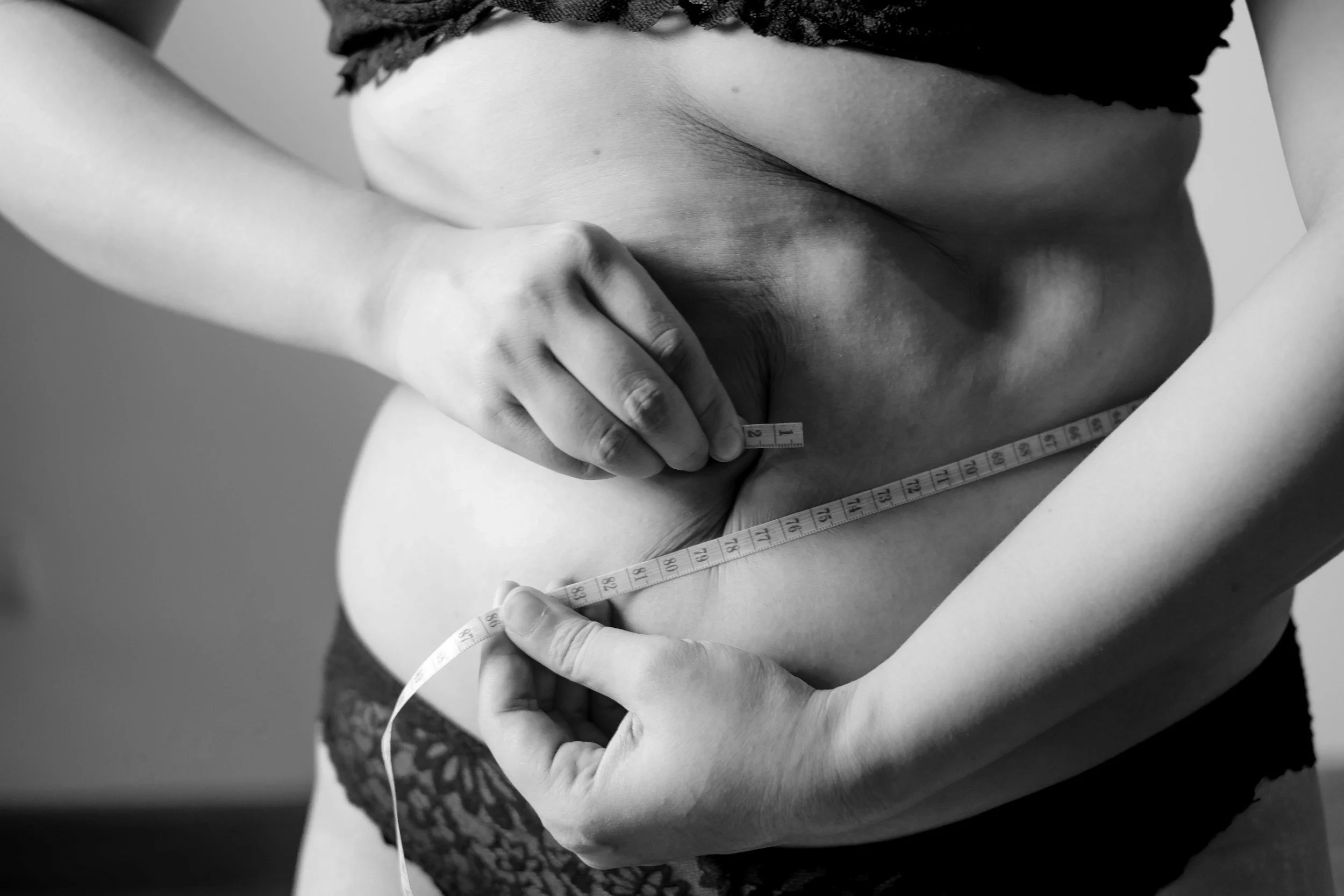
The standard answer is straightforward: facial fat is part of facial youthfulness. When you lose body fat rapidly, you lose facial fat with it, and the skin envelope often doesn't have time to retract around the new volume. The face deflates faster than it can tighten. You see exactly the same pattern in any rapid weight loss: bariatric surgery patients, marathon runners, eating disorder recovery. GLP-1s aren't doing anything mysterious here; they're just very effective at producing fast weight loss.
That answer is correct, but it might not be the whole story.
A growing body of research suggests GLP-1 receptors aren't only on the cells we usually think about (pancreas, gut, brain). They are also expressed on adipose-derived stem cells (ADSCs) and dermal fibroblasts. These are the very cells responsible for facial fat maintenance and collagen production. A 2025 review in Endocrine by Paschou and colleagues proposed that direct stimulation of GLP-1 receptors on these cells may reduce ADSC viability, lower local oestrogen production from dermal white adipose tissue, and indirectly reduce fibroblast-driven collagen synthesis.
A separate 2024 review in Aesthetic Surgery Journal went further, suggesting that the cellular impact on facial fat compartments may be specific to GLP-1RA exposure rather than a generic consequence of weight loss - possibly explaining why some GLP-1 patients seem to age out of proportion to the actual kilograms they have lost.
This is still emerging science. But it is worth knowing that "it's just rapid weight loss" may turn out to be only part of the picture.
What I am seeing in clinic
A patient who, six months ago, had a balanced, well-supported face arrives with a particular kind of hollowness that doesn't behave the way ordinary age-related volume loss behaves. The changes are sharper and the contrast between "before" and "now" is more obvious. The skin envelope has not had years to gradually adjust; it has had months.
The other thing I notice is that GLP-1 patients often don't realise they look different until someone else mentions it. They have been focused on the scale and on how their clothes fit. The face is the last thing they look at, and then suddenly it is the first thing other people comment on.
This matters clinically, because the patient who walks in saying "I want to look like I did before I started Mounjaro" needs a different conversation from the patient who walks in saying "I think I look older." The first is asking for restoration. The second is often asking for something more nuanced.
How we treat it — and why filler isn't always the answer
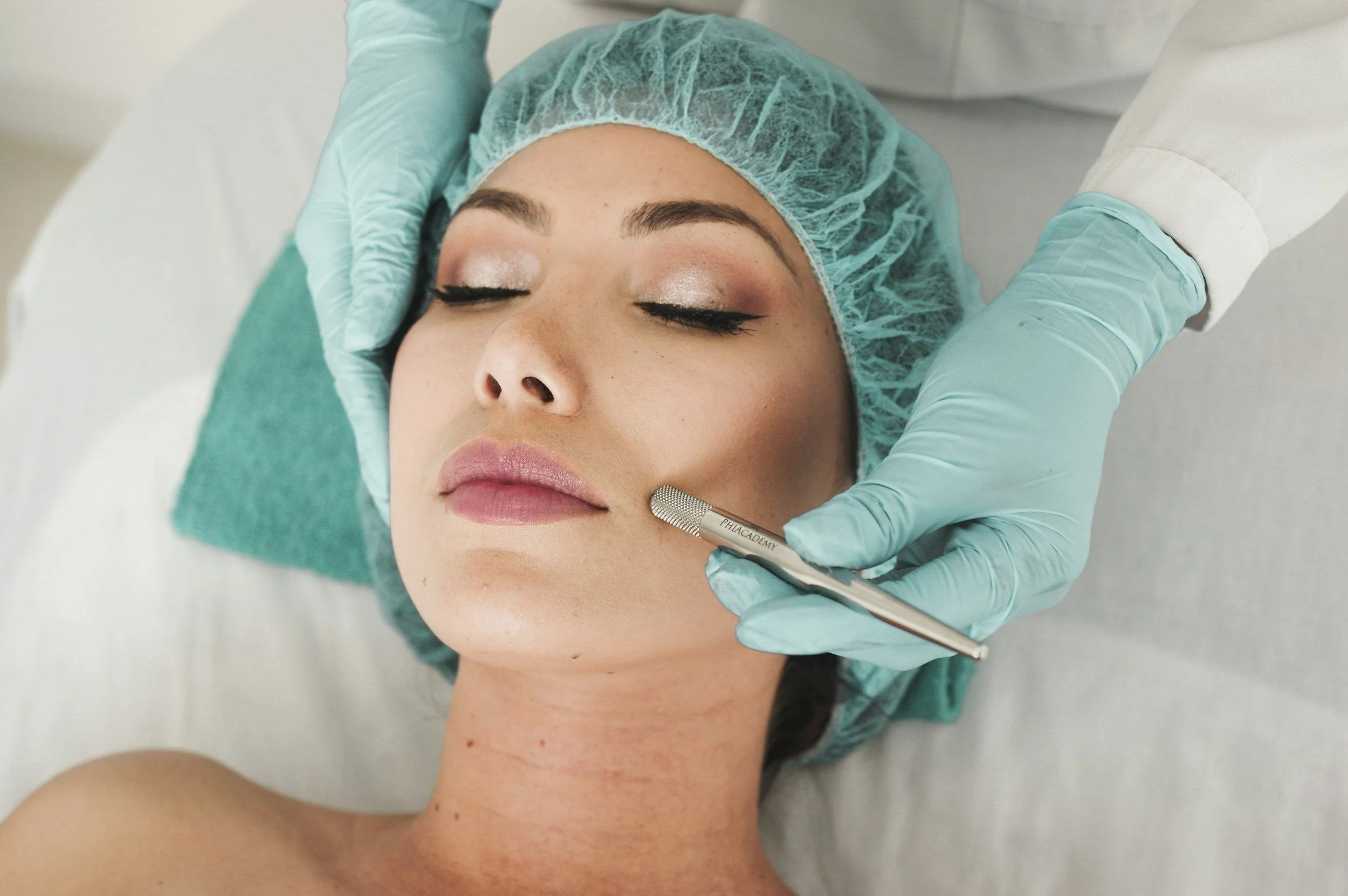
The first global consensus guidelines on managing aesthetic needs in medication-driven weight loss patients were published in January 2026 in Aesthetic Surgery Journal Open Forum (Moradi et al.). The headline recommendation is one that more aesthetic clinicians need to internalise: treat in layers, and don't reach straight for the syringe of HA filler.
The temptation in a deflated face is to refill it. And HA filler does have a role. After all, it is fast, reversible, and forgiving. But filler alone, in a face that has lost both volume and skin quality, very often produces a heavier, puffier, less natural result. You replace the volume but you do nothing for the lax envelope wrapped around it. The face looks fuller, but somehow not younger.
The current thinking is layered:
Biostimulators (poly-L-lactic acid, calcium hydroxylapatite, polynucleotides) to stimulate the patient's own collagen production and improve skin quality over months, not minutes.
Energy-based devices (radiofrequency, microneedling RF, ultrasound) for the skin envelope itself.
Carefully placed structural filler where deep volume genuinely needs replacing.
Neuromodulators for dynamic lines, but used with caution - relaxing muscles in a face with reduced soft-tissue support can actually exaggerate descent rather than correct it.
Skincare, sun protection, and patience - because some of the apparent change continues to settle for months as the patient stabilises.
Timing also matters. The patient who is still actively losing weight is a moving target. Treating too early often means treating again…and again… After all, if the patient is still activley losing weight the face continues to deflate. Sometimes the right answer is "let's wait three months and reassess," even when the patient wants something done today.
The bigger question
Now the part aesthetic medicine has been slower to talk about.
GLP-1 medications - semaglutide, liraglutide, tirzepatide, marketed as Ozempic, Wegovy, Saxenda, Mounjaro - are licensed in the UK for type 2 diabetes and obesity. NICE thresholds for chronic weight management put eligibility at a BMI of ≥30, or ≥27 with weight-related comorbidities (hypertension, dyslipidaemia, sleep apnoea, PCOS, NAFLD, cardiovascular risk). The UK government's August 2025 guidance is explicit that these medications are not purely for aesthetic or cosmetic weight loss. GMC prescribing standards require a clinical indication and a proper assessment.
That does not mean an aesthetic clinic with a qualified prescriber cannot legitimately be involved in this space. It absolutely can -provided the prescriber is conducting a comprehensive medical assessment, screening for exclusion criteria, communicating with the patient's GP, and following the patient longitudinally.
What it does mean is that there is a widening gap between aesthetic clinics doing this properly and those doing it badly. And that gap is where patients are being hurt.
What "badly" actually looks like
The failure modes are specific. They are not "any aesthetic clinic anywhere near a GLP-1." They are:
Prescribing below the NICE threshold: BMI under 27 without weight-related comorbidities, or normal-BMI patients seeking "a dress size smaller for the wedding"
No communication with the patient's GP, leaving the rest of the primary care record blind to the prescription
No proper exclusion screening: pancreatitis history, medullary thyroid cancer or MEN2 family history, active pregnancy or breastfeeding, type 1 diabetes
Package deals that bundle the GLP-1 with future filler and energy treatments as a single product
No follow-up infrastructure: a prescription with no clear plan for what happens at month three, six, or twelve, and no defined pathway for managing side effects
Each of these is a clinical governance failure, not a category-of-clinic failure. The same failures can occur in a digital weight-loss app, a pharmacy-led service, or a private GP practice. But in an aesthetic setting, they collide with an additional problem worth naming.
The closed loop
Here is the version of the "closed loop" critique that I think is fair, and the version I think is overblown.
The unfair version: any aesthetic clinic that prescribes a GLP-1 and also offers volume-restoration treatments has a conflict of interest. This is too broad. By that logic, no obesity service should ever refer onward for any post-weight-loss aesthetic intervention, which is absurd. Patients who have lost a significant amount of weight under proper medical care often legitimately want and benefit from aesthetic support, and there is no inherent ethical problem with a single clinical environment offering both if the governance is right.
The fair version: a clinic that prescribes a GLP-1 outside proper governance - for example to a patient without a real assessment, without GP communication - and then sells that same patient the filler, biostimulator, and energy treatments to address the facial changes the prescription caused, is operating something that is not really a treatment pathway. It is a business model.
The UK position
The August 2025 UK government guidance is unambiguous about one thing: GLP-1s are not for cosmetic weight loss. The GMC's prescribing standards require a clinical indication and a proper assessment. The MHRA, NHS England, and the GPhC have all been increasingly active in this space through late 2025 and into 2026 - most of it directed at unregulated digital weight-loss services and prescribers operating outside accepted thresholds, not at qualified prescribers working within established frameworks.
What this means practically, for a patient walking into an aesthetic clinic:
You are entitled to a real medical assessment. You are entitled to know whether your BMI meets the threshold for prescribing. You are entitled to know whether your GP will be informed. You are entitled to ask about the exclusion criteria being screened for. You are entitled to know the follow-up plan. You are entitled to know what happens if you experience side effects, and whether the clinician prescribing you the medication will be the one managing those side effects.
The bottom line
Ozempic face is real and treatable, and the patients who are arriving in aesthetic clinics with it deserve good clinical care delivered by people who understand how to stage treatment alongside ongoing weight change. The international consensus exists. The science is moving. The clinical infrastructure is there.
Whether GLP-1s themselves should be prescribed by an aesthetic clinic is, in my view, the wrong question. The right question is whether they are being prescribed properly: by the right clinician, to the right patient, within the right thresholds, with the right follow-up, and with proper communication into the rest of that patient's medical care.
That is the question regulation is moving towards. It is the question the responsible end of this industry is already trying to answer. And it is the question you, as a patient, are entitled to put to anyone - me included - who is offering to be part of your GLP-1 journey.
References
Clinical evidence and consensus
Moradi A, Denkova R, Holcomb K, Rossi A, Ashourian N. Nonsurgical Aesthetic Treatment of the Face and Neck in GLP-1 Receptor Agonist Weight Loss Patients: Experience-Based Considerations. Aesthetic Surgery Journal Open Forum. 2026;8:ojag011. doi: 10.1093/asjof/ojag011
Paschou IA, Sali E, Paschou SA, et al. GLP-1RA and the possible skin aging. Endocrine. 2025. doi: 10.1007/s12020-025-04293-w
Decoding the Implications of Glucagon-like Peptide-1 Receptor Agonists on Accelerated Facial and Skin Aging.Aesthetic Surgery Journal. 2024;44(11):NP809. Available at: academic.oup.com/asj
UK regulatory position
UK Government. Guidance on GLP-1 Medicines. Issued August 2025. Available at: gov.uk
General Medical Council. Good Practice in Prescribing and Managing Medicines and Devices. Available at: gmc-uk.org
NHS England. Tirzepatide for managing overweight and obesity – NHS prescribing guidance. June 2025. Available at NHS England



Somewhere in the last year, a remarkable number of people woke up, looked in the mirror, and diagnosed themselves with "cortisol face."
You've seen the videos: a slightly puffy morning selfie, a dramatic arrow pointing at rounded cheeks, and a confident voice explaining that stress has flooded your body with cortisol and bloated your face — but don't worry, because a "cortisol detox," an "adrenal cocktail," or a tub of some hopeful powder will fix it in two weeks. It's compelling. It names a thing you've definitely felt (I don't love my face some mornings either), hands you a villain (stress, cortisol, modern life), and sells you a fix.
Perfect misinformation, really.
So let me do what I do. There is a real medical story under here — it's just not the one TikTok is selling you.