
Beef Tallow Skincare: A Doctor Renders Down the Hype
TikTok would like you to smear rendered beef fat on your face — for glowing, "ancestral," chemical-free skin. As ever, the truth is more boring and more useful than either the evangelists or the eye-rollers will tell you. So let me render it down: what tallow genuinely does, what it absolutely doesn't, and whether you should slather it on.

Every so often a skincare trend arrives that is so gloriously literal I have to admire it. This one is beef fat. On your face. Marketed, with total sincerity, as the secret your great-grandmother knew and “Big Skincare” doesn't want you to have.
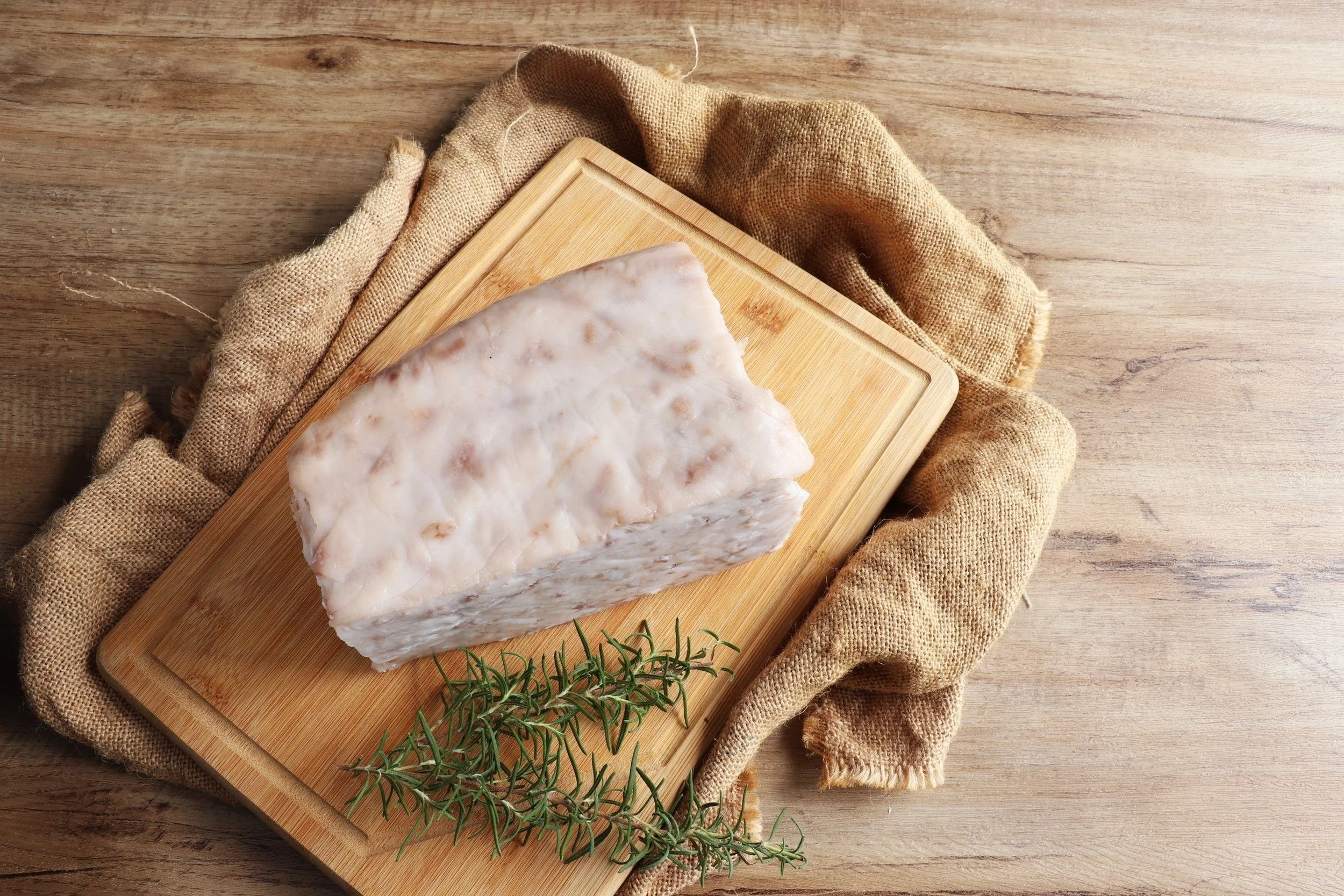
Beef tallow — rendered, purified cow fat — has become the darling of the "ancestral," anti-seed-oil, "just-use-what-nature-intended" corner of wellness. The pitch is seductive: it's natural, it's what humans used before laboratories ruined everything, it's "just like your skin," it's packed with vitamins, and it'll fix your acne, your eczema, your wrinkles and possibly your posture.
As always, I come not to sneer but to sort — because there's a genuine grain of truth in here, wrapped in a great deal of nonsense.
First, let's be fair: it does moisturise
I'm not going to tell you tallow does nothing.
Tallow is a fat, and fats are good occlusive moisturisers — they sit on the skin, slow water loss, and leave it feeling softer. Dermatologists broadly agree on this much: as a rich, occlusive balm, tallow can genuinely help very dry or dehydrated skin feel more comfortable, in the same way that other heavy oils and butters do. If you have parched skin, rub tallow on it, and it feels better — you're not imagining that. It's doing exactly what any thick emollient does.
So as a basic moisturiser for dry skin? Fine. Reasonable, even. The problem is that "fine, reasonable moisturiser" is not what it's being sold as.
The claims are galloping ahead of the evidence
Here's the reality check. In 2025, researchers actually went and analysed the beef tallow claims circulating on TikTok, Instagram and YouTube — and the findings are about what you'd guess. The most common claims were that it treats acne, eczema and psoriasis — and those claims "largely lacked cited evidence." Most of the posts came from people with no healthcare credentials, and a striking proportion carried financial bias (they were, one way or another, selling it). And crucially, what little scientific evidence exists is about tallow's individual ingredients in isolation — not about tallow itself doing anything to real human skin.
The authors' conclusion was refreshingly plain: despite all the anecdotal enthusiasm, "evidence remains insufficient to support these claims." There are, to be clear, no proper clinical trials showing tallow treats any skin condition.
Now let me pick apart the three biggest specific claims, because each has a nice fatal flaw.
Myth 1: "It's just like your skin's own oils"
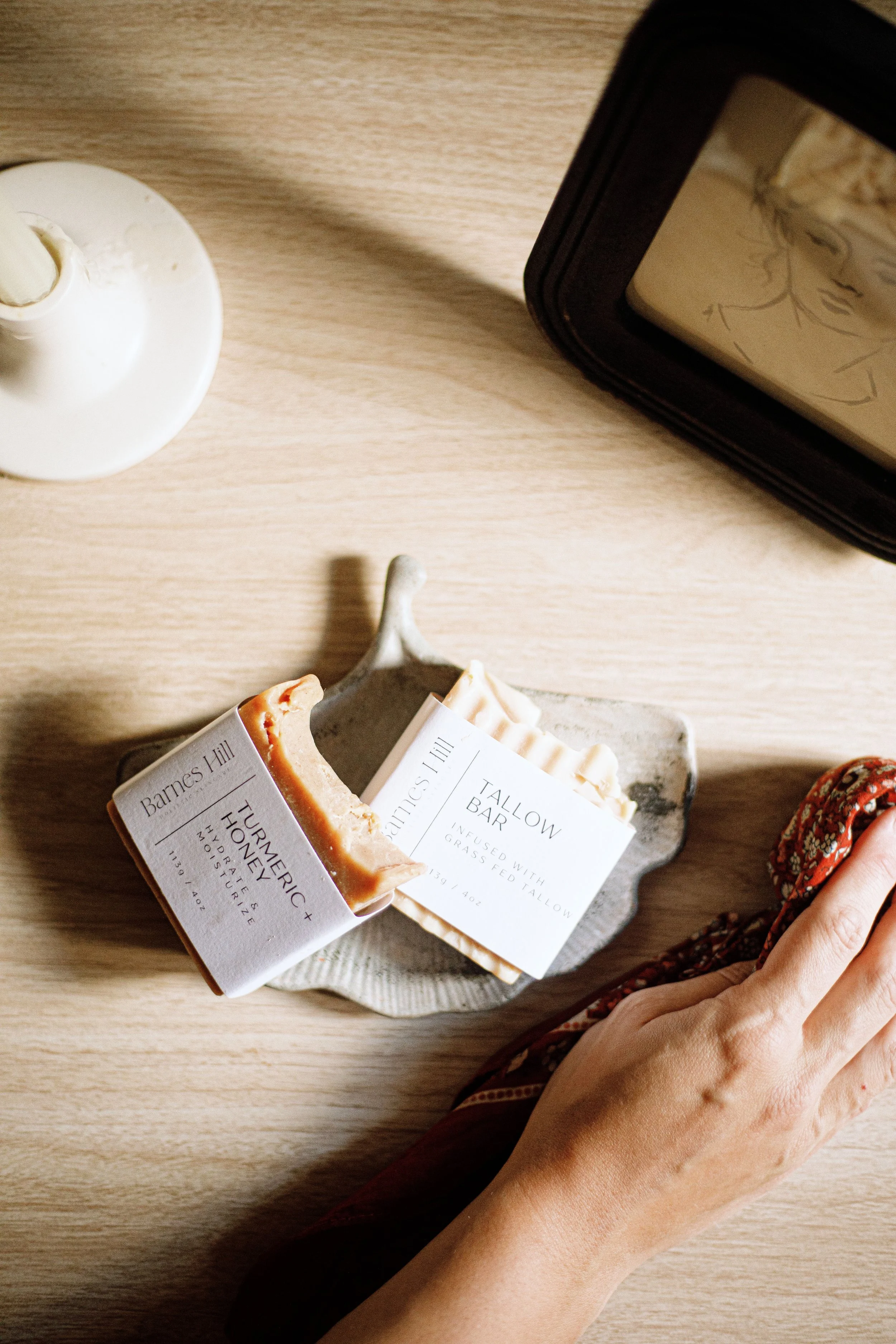
This is the clever one, because it sounds scientific. The line is that tallow is "biocompatible" — basically identical to human sebum and skin lipids — so your face just drinks it up.
But…it isn't.
Your skin barrier is built largely from a very specific trio of lipids: ceramides, cholesterol and free fatty acids, arranged in an exquisitely ordered structure. Beef tallow is mostly triglycerides — a different class of fat entirely. Yes, it contains some of the same fatty acids your skin does, but "shares some ingredients" is doing enormous work in that sentence. Chicken pot pie and a birthday cake share ingredients too. Tallow is a perfectly nice occlusive; it is not a bespoke replacement for your skin's own barrier lipids, however poetic that sounds.
Myth 2: "It's packed with vitamins — it's anti-ageing"
Tallow does contain small amounts of fat-soluble vitamins — A, D, E, K. This gets inflated into "a natural vitamin serum" and, inevitably, "anti-ageing."
Two problems. First, the amounts are small and wildly variable depending on the animal and the rendering — this is fat, not a formulated, stabilised, dose-controlled treatment. Second, and more importantly: the vitamin A in tallow is not the same as a retinoid, the actual evidence-based anti-ageing ingredient dermatologists prescribe. Smearing on a little dietary vitamin A in beef fat does not deliver the collagen-stimulating effects of a proper retinol or tretinoin, and there's no evidence it does anything measurable to wrinkles. If you want anti-ageing, the answer is a retinoid and sunscreen — not a scoop of suet.
Myth 3: "It clears acne" (the ironic one)
This is my favourite, because it's precisely backwards for a lot of people.
Tallow is high in oleic acid, and it's an occlusive — which makes it, for many, comedogenic: it can clog pores. Dermatologists are consistent on this point: if you have acne-prone or oily skin, tallow is one of the last things they'd recommend, because it can cause or worsen breakouts. So a product being enthusiastically sold as an acne cure is, for the exact people most likely to try it for that reason, a plausible way to make things worse. If you're acne-prone, this trend is not your friend.
(It may genuinely suit the opposite person — very dry, eczema-prone, non-acneic.)
The bit underneath: "natural" is not an argument
Here's what's really powering this trend, and it's worth calling it out because it's the same engine behind half the wellness misinformation I write about.
Beef tallow is riding the "ancestral / anti-seed-oil / chemicals-are-the-enemy" wave — the belief that if something is animal-derived and old-fashioned it must be superior to anything made in a lab.
This is the appeal-to-nature fallacy, and it falls apart the moment you poke it. Petrolatum — humble, unglamorous Vaseline — is one of the most effective and best-studied occlusive moisturisers on earth, gentle enough for newborns and post-surgical skin, and the "natural" crowd despises it precisely because it sounds like a chemical. Meanwhile poison ivy, arsenic and, yes, the odd fatal allergy are all impeccably natural. "Natural" tells you where something came from. It tells you nothing about whether it's safe, effective, or right for your face.
So — should you use it?
I mean…sure. If you have dry, non-acne-prone skin, you're not vegan or beef-allergic, and you genuinely like it, tallow is a perfectly acceptable natural occlusive moisturiser. Patch test first (beef protein allergy is a real thing), accept that it smells faintly of a Sunday roast, and enjoy your balm.
But please hold onto what it is and isn't. It is a decent emollient. It is not a proven treatment for acne (and may worsen it), not an anti-ageing retinoid, not a magical sebum-replica, and not superior to a well-formulated moisturiser — several of which are cheaper, better studied, and won't go rancid in your bathroom.
The bottom line
Beef tallow is a fat. Fats moisturise. That's the whole story.

References
Beef tallow-based skincare claims in social media: a cross-sectional analysis [Internet]. PubMed; 2025. Available from: https://pubmed.ncbi.nlm.nih.gov/41312576/
Beef tallow as a moisturizer? Dermatologists weigh in on the trend [Internet]. NBC News Select. Available from: https://www.nbcnews.com/select/shopping/beef-tallow-for-skin-rcna197721
Beef tallow moisturizer: what to know about the TikTok trend [Internet]. Healthline. Available from: https://www.healthline.com/health-news/beef-tallow-moisturizer-tiktok-trend
Why dermatologists don't recommend tallow for facial skincare [Internet]. Peach Dermatology. Available from: https://www.peachdermatology.com/blog/why-your-dermatologist-doesn-t-recommend-tallow-for-your-face
American Academy of Dermatology. Moisturizer: why you may need it and how to choose one — occlusives, emollients and the skin barrier [Internet]. Available from: https://www.aad.org/public/everyday-care/skin-care-basics/dry/moisturizer
The skin barrier and its lipids (ceramides, cholesterol, free fatty acids): background [Internet]. Available from: https://www.ncbi.nlm.nih.gov/books/NBK470464/

TikTok would like you to smear rendered beef fat on your face — for glowing, "ancestral," chemical-free skin. As ever, the truth is more boring and more useful than either the evangelists or the eye-rollers will tell you. So let me render it down: what tallow genuinely does, what it absolutely doesn't, and whether you should slather it on.