Belladonna: The Beauty Drops That Blinded
Renaissance women dripped a deadly poison into their eyes to make their pupils huge, dark and dreamy. It worked, but it also blurred their vision, flooded their eyes with painful light, and could, over time, blind them. This is the story of deadly nightshade, the "beautiful lady" who couldn't see, and the strange, redemptive second life of the poison in her eyes.
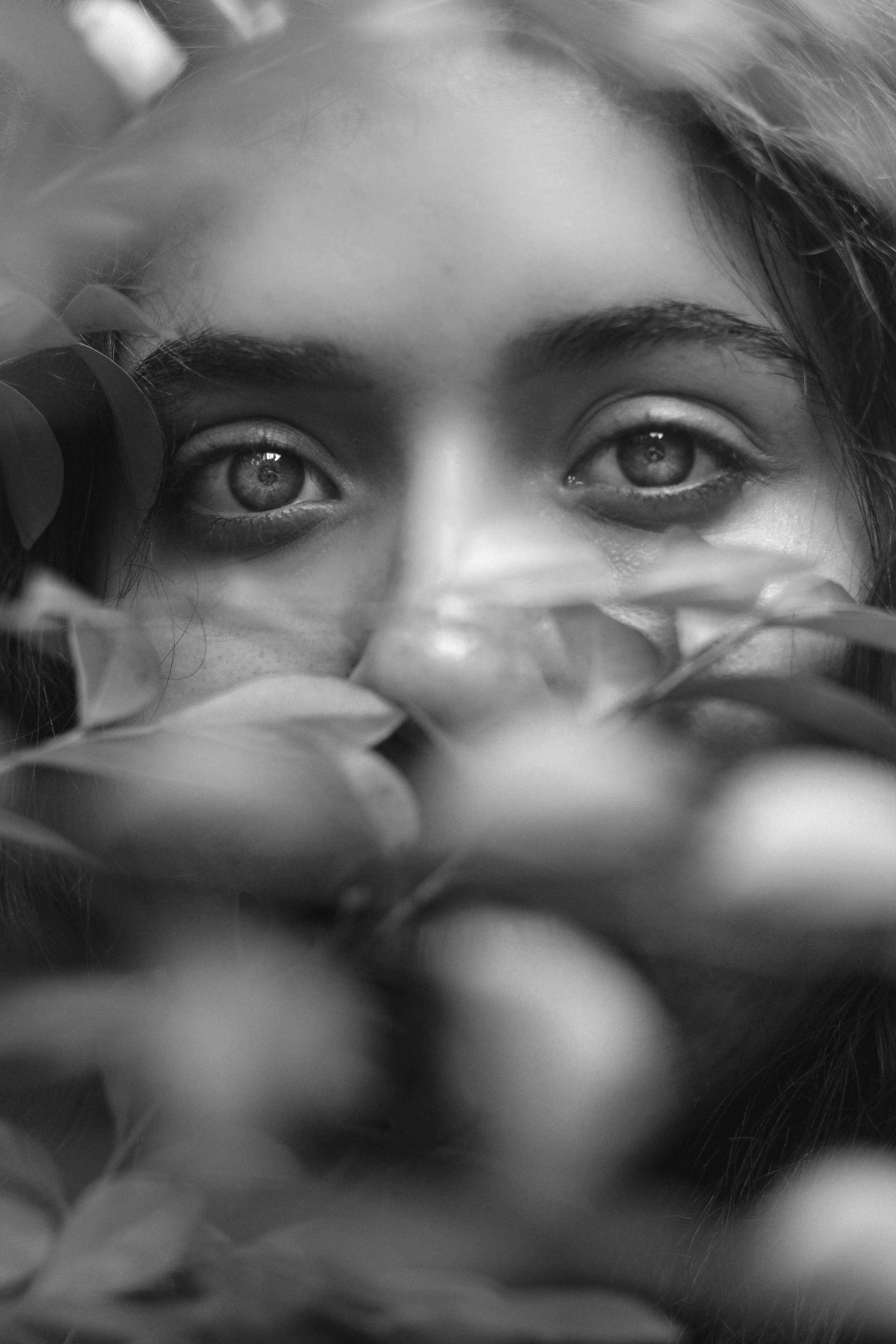
Belladonna. Bella donna. Beautiful lady.
It sounds like a compliment, or a perfume. It is, in fact, the common name of deadly nightshade — Atropa belladonna — one of the most poisonous plants in Europe, and for centuries one of the most fashionable. The plant's genus, Atropa, is named after Atropos — one of the three Fates of Greek myth, the one whose single job was to cut the thread of human life.
The look they were dying for (nearly literally)
So why would anyone drip nightshade into their eyes?
For the pupils.
Fashionable women in Renaissance Italy — and for a long time after — prized large, dark, liquid pupils. It does make biological sense: a big pupil is one of the body's genuine, involuntary tells of attraction and arousal. When we look at something (or someone) we like, our pupils dilate. So a wide black pupil reads as interest — as desire, softness, and availability. It's the reason candlelit restaurants are flattering, and it's why, to this day, so many mascara and lash adverts are really selling you the illusion of a bigger, darker eye.
The women of the era simply took a short cut. A few drops of belladonna extract into the eye, and within the hour the pupils would blow open — huge, dark, dreamy — and stay that way for hours. Instant doe-eyed allure, no feelings required.
The trouble is what else those drops were doing.
The pharmacology, in plain English
Deadly nightshade is stuffed with a family of compounds called tropane alkaloids — the famous ones being atropine, hyoscyamine and scopolamine. They are anticholinergics: they block a neurotransmitter called acetylcholine, which your body uses to run a great many quiet background jobs — including the fine muscle control inside your eye.
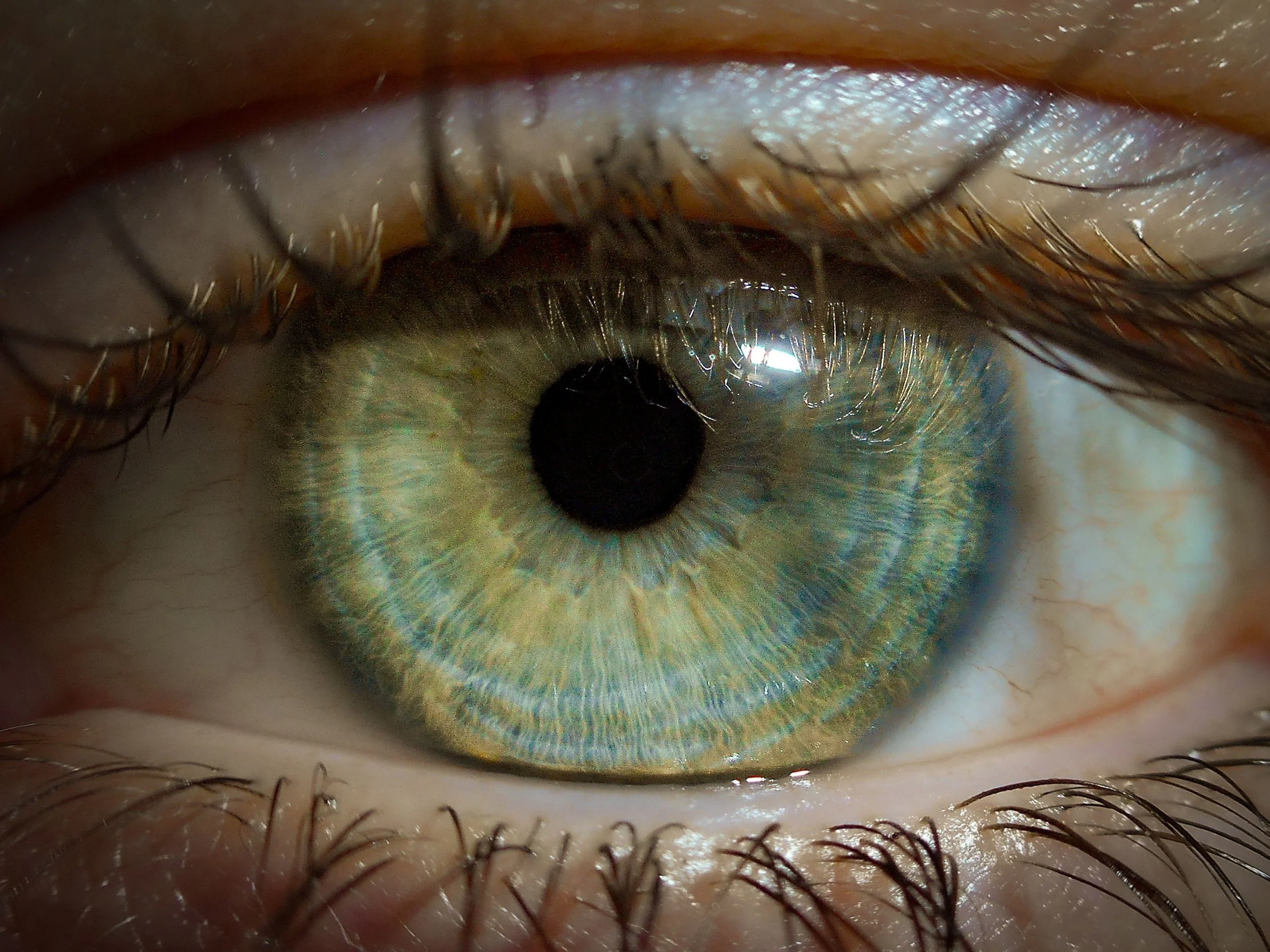
Two of those muscles matter here. One is the iris sphincter, the ring that constricts your pupil. The other is the ciliary muscle, which changes the shape of your lens so you can focus up close. Belladonna paralyses both.
Paralyse the iris sphincter and the pupil can't constrict — so it sits wide open, drinking in light. That's the mydriasis: the beautiful, enormous pupil. But paralyse the ciliary muscle too — an effect called cycloplegia — and you lose the ability to focus for near vision. Everything close swims. You can't read, can't sew, can't see the face in front of you sharply.
Put those together and you get the exquisite, awful irony at the centre of this whole story. The Renaissance beauty with the dreamy, faraway gaze often had that gaze because she genuinely could not see you. The look of soft, unfocused longing was, quite literally, a woman who'd chemically unfocused her own eyes. Beautiful, and half-blind, on purpose.
From "a bit blurry" to genuinely dangerous
A one-off might wear off. But this was a habit, repeated for fashion, and the harms stacked up.
A permanently wide pupil can't do its main job, which is to shrink in bright light to protect the eye. So belladonna users were left with painful light sensitivity — sunlight like knives — and their retinas taking far more light than they were built for. Vision became chronically blurred. And in some eyes, forcing the pupil wide can slam shut the eye's own drainage angle and trigger acute angle-closure glaucoma — a sudden, ferocious spike in eye pressure that, untreated, can permanently destroy the optic nerve and blind you within a day. Over years the beauty drops dimmed, and sometimes stole, a woman's sight.
And that's before we get to the fact that this is deadly nightshade, and the eye is a very absorbent place. The alkaloids didn’t stay put. Absorbed enough, belladonna produces the full, memorable anticholinergic toxidrome that generations of medical students learn as a grim little rhyme — hot as a hare, dry as a bone, red as a beet, mad as a hatter, blind as a bat. Translated: racing heart, dry flushed skin, a soaring temperature, blurred vision, hallucinations and delirium. In real doses it kills — which is exactly why the plant's berries earned nicknames like devil's berries and murderer's berries, and why belladonna has a long, gruesome CV as a poison and an assassin's tool, quite apart from anyone's vanity.
The redemption arc (my favourite part)
Now — because this blog is not only here to frighten you off historical cosmetics — here is the genuinely lovely twist. Atropine — the very molecule that blurred those Renaissance eyes — turned out to be one of the most useful drugs humanity has. It's on the World Health Organization's list of essential medicines. Eye doctors still use it (and its gentler relatives) to dilate your pupils for a proper retinal exam — the same effect the bella donne chased, now controlled, temporary and deliberate. Anaesthetists use atropine to steady a dangerously slow heart and dry secretions during surgery. And, remarkably, atropine is the frontline antidote to nerve-agent and organophosphate-pesticide poisoning — the poison in the pretty plant is, in the right hands, a literal lifesaver.
But my favourite redemption of all is the newest one. It turns out that very low-dose atropine eye drops — around 0.01% — can meaningfully slow the progression of short-sightedness (myopia) in children. A dab at bedtime appears to roughly halve how fast many children's myopia worsens, with very few side effects at that tiny dose.
Regular readers will feel the familiar shape. A powerful biological substance, sold into a manufactured beauty ideal, used unregulated, undiluted and unsupervised, in pursuit of a look — that is the danger, whether it's radium, mercury, or nightshade in the eye. The exact same compound, used at the right dose by someone who actually understands it, is a medicine. The dose, the intent and the person holding the bottle were always the most important part of the story.
The bottom line
Please never, ever put belladonna — or any raw plant extract, or an unregulated "natural" or homeopathic eye drop of unknown ingredients — anywhere near your eyes.
Deadly nightshade is a serious poison, the eye absorbs it readily, and there are documented modern cases of people harming themselves with belladonna-containing drops.
If you want bigger, brighter-looking eyes, the safe tools are cosmetic and reversible: lashes, liner, brightening the waterline, a decent night's sleep. And if a genuine dilating or myopia treatment is ever right for you or your child, that's a conversation with an optometrist or ophthalmologist, using a properly formulated, correctly-dosed, prescribed medicine — not a Renaissance party trick.
The bella donna paid for her beautiful eyes with her sight. You really don't have to.


References
Belladonna's dark past — history of deadly nightshade as cosmetic and poison, "beautiful lady" etymology and pupil dilation for beauty. Healthline. Available from: https://www.healthline.com/health/belladonna-dark-past
Atropine and the "beautiful lady" — pharmacology of belladonna alkaloids (atropine, hyoscyamine, scopolamine), anticholinergic mydriasis, Renaissance cosmetic use, and the Atropa/Atropos etymology. Nature's Pharmacy. Available from: https://naturespharmacy.substack.com/p/atropine-and-the-beautiful-lady
Atropa belladonna — overview of tropane alkaloids, mechanism and toxicity. ScienceDirect Topics. Available from: https://www.sciencedirect.com/topics/neuroscience/atropa-belladonna
Atropine — anticholinergic mechanism, mydriasis and cycloplegia, clinical uses. Tulane University School of Medicine PharmWiki. Available from: https://tmedweb.tulane.edu/pharmwiki/doku.php/atropine
Barkana Y, et al. Acute angle-closure glaucoma precipitated by homeopathic eye drops containing Atropa belladonna — mechanism of vision-threatening harm. American Journal of Emergency Medicine. Available from: https://www.sciencedirect.com/science/article/abs/pii/S0735675721009025
Severe neurotoxicity due to Atropa belladonna poisoning: a case report and literature review (anticholinergic toxidrome). PMC. Available from: https://pmc.ncbi.nlm.nih.gov/articles/PMC11449552/
Low-dose atropine for children with myopia — 0.01% concentration, roughly halves progression, safety profile. American Academy of Ophthalmology. Available from: https://www.aao.org/eye-health/news/low-dose-atropine-kids-with-myopia
Low-dose atropine for myopia progression in children: 2017–2024 systematic review and meta-analysis of randomised placebo-controlled trials. Frontiers in Medicine. Available from: https://www.frontiersin.org/journals/medicine/articles/10.3389/fmed.2026.1715033/full

A century ago, "radiant" wasn't a metaphor. Radium was in face creams, tonics and toothpaste, sold as the secret to glowing, youthful skin — while, in factories nearby, young women who painted it onto watch dials were quietly dying of it. This is the story of the glow, the girls, and the reckoning that changed how we protect people from the things we sell them.