
The Girls Who Glowed: The Radium Beauty Craze and the Women It Killed
A century ago, "radiant" wasn't a metaphor. Radium was in face creams, tonics and toothpaste, sold as the secret to glowing, youthful skin — while, in factories nearby, young women who painted it onto watch dials were quietly dying of it. This is the story of the glow, the girls, and the reckoning that changed how we protect people from the things we sell them.

We throw the word "radiant" around constantly in my line of work. Glowing skin, lit-from-within, luminous. It's the compliment the entire beauty industry is built on. So let me tell you about the era when "radiant" was meant literally — when the glow came from radium, and it was killing people while they smiled.
I've written before about radiation's longer, stranger relationship with cosmetic medicine (you can read that here). But that piece was about the science. This one is about the people — and it's one of the most human, most infuriating stories in the history of beauty. Settle in.
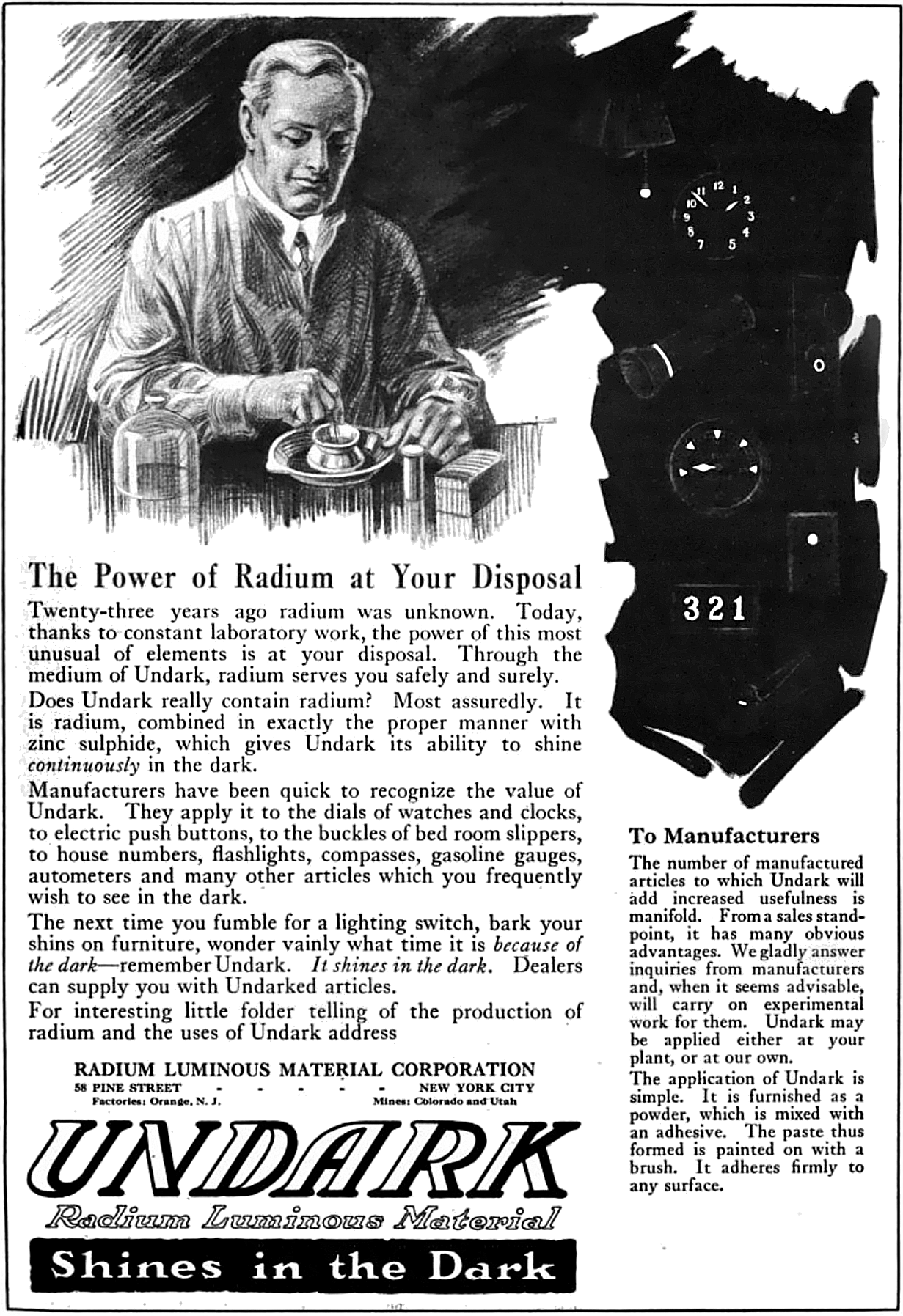
"The Story of a Great Engineer". The American Magazine92: 85. Springfield, Ohio: The Phillips Publishing Co. Public domain.
When radioactivity was a selling point
When Marie and Pierre Curie isolated radium in 1898, it must have seemed like magic made solid: a substance that glowed in the dark, all on its own, apparently pouring out energy from nowhere. And because the early 20th century had absolutely no idea what that energy was doing to living tissue, the marketing men did what marketing men do. They put it in everything.
Radium became the wellness-and-beauty miracle of its day.
There was Radithor — literally radium dissolved in water, sold in little bottles as a health tonic promising vigour, vitality and "perpetual sunshine." There was radioactive toothpaste (a German brand called Doramad, promising sparkling teeth). And, most on-brand for us, there was Tho-Radia: a French cosmetics line launched in 1932, selling radium-and-thorium face cream, powder, soap and lipstick, with advertising that showed a young woman glowing, lit from below by visible rays. The promise was exactly the one we still make today — firmer, fresher, more luminous skin — except the active ingredient was a bone-seeking carcinogen.
The branding was as cynical as the science was absent. Tho-Radia's products were fronted by a "Dr Alfred Curie" — a real doctor, but one with no relation whatsoever to Marie and Pierre; the surname was simply borrowed to sprinkle Nobel stardust over the label. (The actual Curies reportedly considered legal action.) People slathered it on, drank it down, and believed they were buying health. They were buying a slow, glowing poison.
Eben Byers, and the jaw that came off
If you want to understand how convincing the con was, consider Eben Byers — a wealthy, athletic, Yale-educated industrialist and champion golfer, exactly the sort of man who could afford the best advice and got the worst.
In 1927, nursing an arm injury, Byers was prescribed Radithor by his doctor. He felt marvellous on it — energised, invigorated — and, being rich and enthusiastic, he didn't stop. Over the next few years he drank an estimated 1,400 bottles. The radium did what radium does: it mimicked calcium, embedded itself in his bones, and began, quite literally, to dissolve him from the inside. His jaw disintegrated and had to be largely removed. Holes opened in his skull. He died in 1932.
The case was so grotesque, and Byers so prominent, that it finally forced the authorities to act, strengthening the young Food and Drug Administration's hand against radioactive quackery. It also produced what may be the bleakest headline in the history of health journalism, from the Wall Street Journal: "The Radium Water Worked Fine Until His Jaw Came Off." When his body was exhumed decades later, in 1965, it was still fiercely radioactive, despite a lead-lined coffin. Radium does not forgive, and it does not leave.
But Byers, for all the horror, was a rich man who chose his poison. The truly unforgivable part of this story happened to women who were given no such choice.
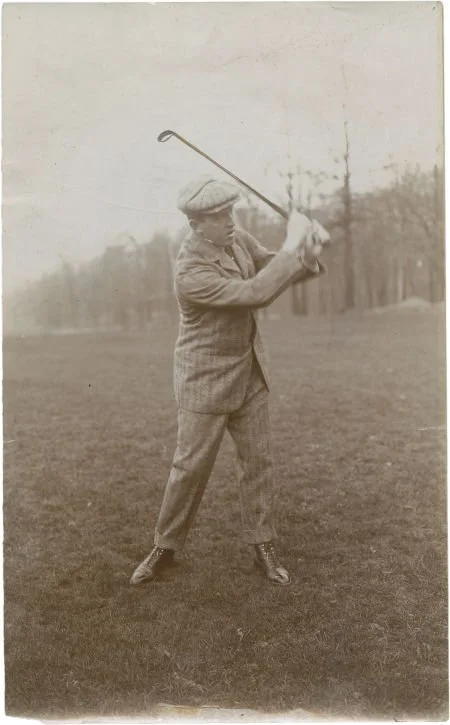
Golfist, industrialist & socialite Eben Byers (1880-1932) in 1920s. Public domain.
The Radium Girls

All women or girls using radium paint with no protection or warnings in 1922. Public domain.
In factories in New Jersey, Illinois and Connecticut, from around 1917, hundreds of young women — some barely teenagers — sat at long benches painting luminous radium paint onto the dials of watches and clocks, so soldiers and sleepers could tell the time in the dark. It was clean, well-paid, even glamorous work. The girls glittered. They painted their nails and teeth with the stuff for fun, wore their good dresses to catch the sparkle, walked home glowing faintly in the dusk.
They were taught to keep their brushes fine enough for the delicate numerals by shaping the bristles between their lips.
Dip, lip, paint. Dip, lip, paint.
Hundreds of times a day, they were quite literally eating radium — on the explicit instruction of employers who, it later emerged, knew exactly how dangerous it was, and who handled the raw material themselves with lead shields and tongs.
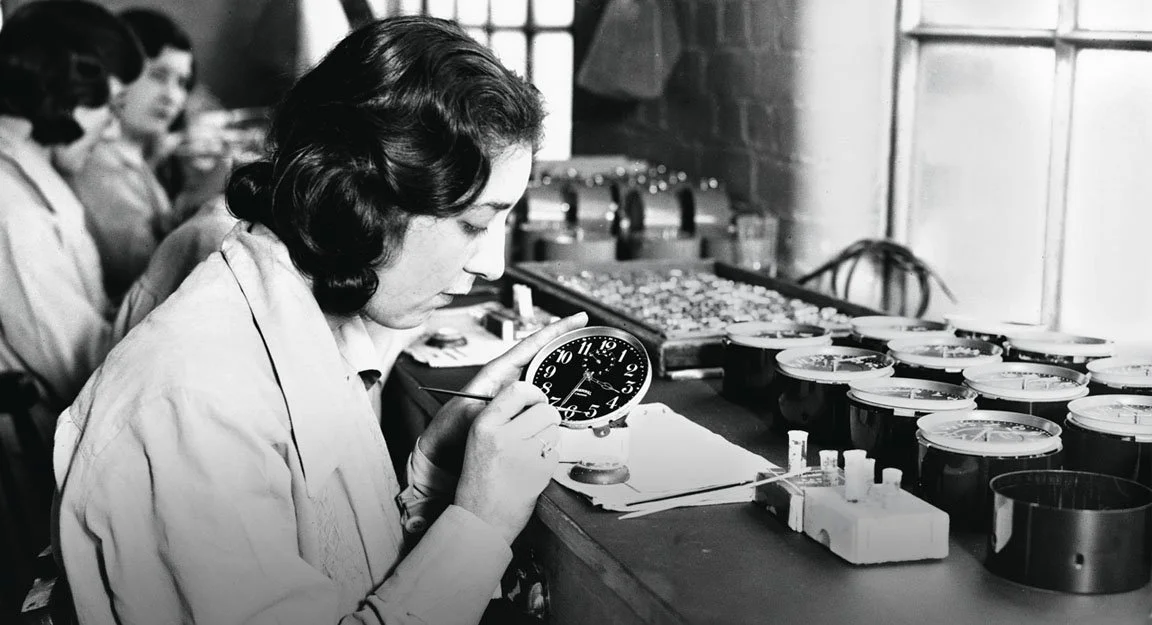
"The Radium Girls", painting the hands and spheres of watches and compasses. Creative Commons Attribution-Share Alike 4.0
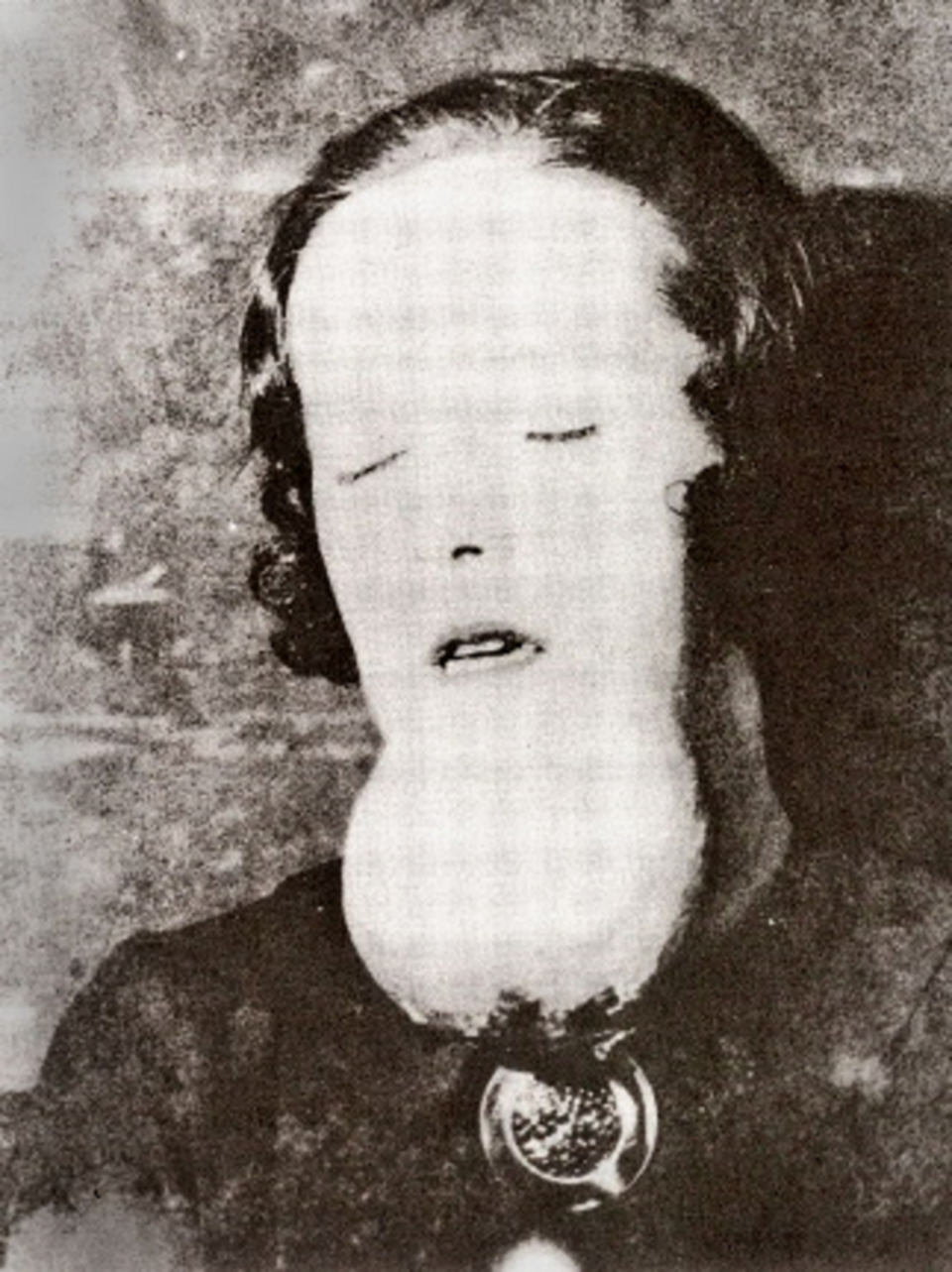
Amelia Maggia after radium poisoning, with a large bone sarcoma on her chin. Creative Commons Attribution-Share Alike 4.0
The first to die was Amelia "Mollie" Maggia, a dial painter at U.S. Radium in Orange, New Jersey. From 1921 her teeth began falling out; her jaw became a mass of infection and ulceration; at one point a doctor lifted out her entire lower jawbone, not by surgery but simply by touching it, because the bone had crumbled. She died in agony in 1922 — and her death was recorded, shamefully, as syphilis, a final insult that blamed the victim for the company's poison.
Then there was Grace Fryer. She'd started at U.S. Radium at eighteen, left in 1920 for a job at a bank, and within two years her teeth were loosening and her jaw aching. Doctor after doctor was baffled; it took until 1925 for one to connect her ruined bones to the radium. Grace decided to sue — and it took her two years just to find a lawyer brave enough to take on U.S. Radium. When she finally did, four other dying women joined her: Quinta McDonald and Albina Larice (both, wrenchingly, Mollie Maggia's sisters), Edna Hussman, and Katherine Schaub. The press, with grim accuracy, called them "the Case of the Five Women Doomed to Die."
By the time the case was heard, several of them were too ill to raise their arms to take the oath. They settled in 1928: each received a lump sum, an annual pension, and medical costs. It was a landmark — but it was also a pittance for a life, and it came too late for most of them. Grace Fryer died in 1933, at thirty-four, of a radium-induced sarcoma.
The woman who testified from her deathbed
The fight didn't end in New Jersey. In Ottawa, Illinois, the Radium Dial Company kept its workers painting — and kept reassuring them — even after the New Jersey deaths made the papers. There, the standard-bearer became Catherine Wolfe Donohue.
By the late 1930s Catherine was dying: her hip and jaw crumbling, her weight dropping to under five stone, unable to walk. And still the company denied everything. So in 1938, too weak to attend court in the ordinary way, Catherine gave her testimony from her own bed, her lawyer and the commissioners gathered around her, holding up fragments of her own bone that had worked their way out through her skin. She won her case against the company. She died weeks later. She was one of a group who called themselves, with terrible gallows humour, the "Society of the Living Dead."
These women did not just win compensation. Their cases — and the doctors like Harrison Martland who finally proved what radium did to the body — helped establish the principle that an employer is responsible for the safety of its workers, and helped build the entire modern edifice of occupational health law, radiation safety standards, and the right to hold a powerful company to account. When you hear a Geiger counter on a hospital wall, or see a radiographer step behind a screen, you are, in a real sense, looking at Grace Fryer's and Catherine Donohue's legacy. They bought that safety with their bones.
The glow we still chase

Here's the part that keeps me thinking, as someone whose whole job is helping people look "radiant."
The radium craze wasn't an aberration of stupid people in a stupid past. It was a perfectly ordinary human story: a genuine scientific discovery, an industry desperate to monetise it, marketing that borrowed the glamour of real science ("Dr Curie"), a public longing to look young and well, and a lag — fatal, in this case — between selling something and understanding it.
We are, thankfully, better regulated now. But the impulse the radium sellers exploited hasn't changed a bit. The lesson the Radium Girls paid for isn't "old beauty products were bad." It's the one this blog keeps coming back to: be very, very careful of a glow that someone is selling you before the science has caught up — and never, ever trust that "it feels great" means "it's safe."
The bottom line
Radium was the miracle glow-up of its age, and it ate people alive — a rich man who drank it by choice, and a generation of young women who were made to eat it by the spoonful and then called liars as they died. The fact that they turned their own horrifying deaths into the workplace protections that keep the rest of us safe is, I think, one of the many unknown heroic stories of the twentieth century.
So the next time someone promises you radiance, by all means enjoy it — I sell it myself. But spare a thought for the girls who glowed for real. They are the reason we now ask what's actually in it, and who says it's safe, and how do they know — the three questions that, a hundred years ago, nobody thought to ask until the jaws started coming off.


References
Moore K. The Radium Girls: The Dark Story of America's Shining Women. Sourcebooks; 2017. (The definitive account of the dial painters.)
Grace Fryer and the New Jersey Radium Girls — U.S. Radium, lip-pointing, the 1927–28 lawsuit and settlement [Internet]. Wikipedia. Available from: https://en.wikipedia.org/wiki/Grace_Fryer
New Jersey's "Radium Girls" and the scientist who came to their aid [Internet]. National Institute of Standards and Technology (NIST). Available from: https://www.nist.gov/blogs/taking-measure/new-jerseys-radium-girls-and-nist-trained-scientist-who-came-their-aid
Catherine Wolfe Donohue Collection on the Radium Dial Company [Internet]. Northwestern University Libraries. Available from: https://dc.library.northwestern.edu/collections/c70bcbd0-85c2-41b4-aa44-f184d2521db8
Harrison Stanford Martland — the medical examiner who documented radium poisoning [Internet]. Wikipedia. Available from: https://en.wikipedia.org/wiki/Harrison_Stanford_Martland
Radithor and Eben Byers — the radium tonic and its most famous victim [Internet]. Wikipedia. Available from: https://en.wikipedia.org/wiki/Radithor
Tho-Radia — the radioactive French cosmetics line (1932–1968) [Internet]. Wikipedia. Available from: https://en.wikipedia.org/wiki/Tho-Radia
When beauty products were radioactive [Internet]. CNN Style. Available from: https://www.cnn.com/style/article/when-beauty-products-were-radioactive
Ashley E. Radiation in cosmetic medicine [Internet]. The Aesthetics Edit / Dr Emmaline. Available from: https://www.dremmaline.co.uk/blog/radiation-in-cosmetic-medicine?rq=radium

A century ago, "radiant" wasn't a metaphor. Radium was in face creams, tonics and toothpaste, sold as the secret to glowing, youthful skin — while, in factories nearby, young women who painted it onto watch dials were quietly dying of it. This is the story of the glow, the girls, and the reckoning that changed how we protect people from the things we sell them.