The Prescriber You Never Met: The Hidden Problem Behind Your Botox
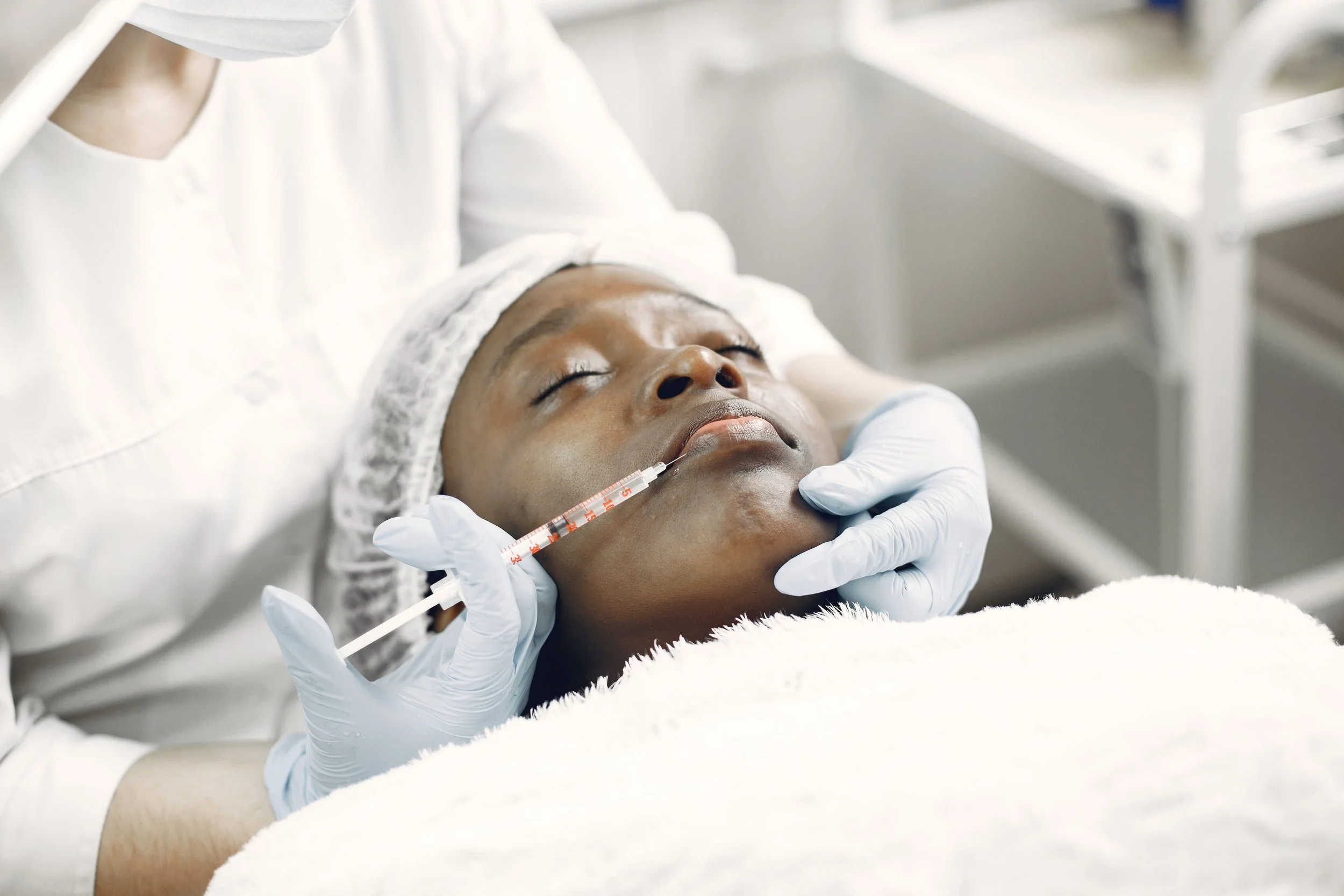
Picture this scene: You are sitting in a treatment room. Someone you like and trust is about to inject a prescription-only medicine into your face. The vial appears, the needle is drawn up, and at no point does anyone mention the person whose signature made that treatment legal — the prescriber.
In a great many cases, you will never meet them. In some, they will never have laid eyes on you at all.
Wait a second… How is that even possible? you might ask. Surely if someone is injecting me with a medication, they are a prescriber and a healthcare professional??!
This is the current unregulated nature of aesthetics in the UK, where it is legal for non-medics to administer botulinum toxin.
This is one of the least understood corners of the aesthetics industry, and one of the most important. We’ve covered it before, but let’s dive a little deeper. The truth is more troubling — and more fixable — than most patients realise.
Why your Botox needs a prescriber in the first place
Botulinum toxin — the drug behind every "Botox," "wrinkle-relaxing" or "anti-wrinkle" treatment — is a prescription-only medicine. That status is not an accident of bureaucracy. It exists because the drug is powerful, because it is not suitable for everyone, and because deciding whether a particular person should receive it is a clinical judgement.
By law, that judgement must be made by a qualified, registered prescriber: a doctor, a dentist, or a nurse or pharmacist with independent prescribing qualifications. The prescriber is meant to assess you — your health, your medications, your history, your expectations, your suitability — and only then authorise the medicine. It is the single most important safety check in the entire process, because it is the point at which someone with medical training asks the question that matters most: should this treatment happen at all?
Here is the problem. In much of this industry if you’re not going to a proper medical aesthetics clinic, the person doing the assessing and the person doing the injecting might not be the same — and the prescriber, the one the law relies upon, has sometimes been reduced to a signature on a form.
The remote prescribing loophole
For years, a shadow practice flourished: remote prescribing. A prescriber would authorise botulinum toxin for a patient they had never met, based on a photograph, a completed form sent over WhatsApp, a brief video call, or nothing more than the word of the non-medical injector requesting it.
The scale of it was laid bare by a Sunday Times undercover investigation, reported by the patient-safety organisation Save Face. A reporter posing as a beautician used an app connecting thousands of beauticians to a pool of medics willing to prescribe. Of seven prescribers approached, four agreed to sign off on treatment for patients they would never assess — some for as little as £20 to £40 a prescription, some even offering to authorise extra so that injectors could build up a private stockpile of the drug. Save Face's own figures told the same story: of the Botox-related complaints they received in one year, more than three-quarters involved no face-to-face consultation with a prescriber.
When it goes wrong, it goes wrong on real faces. The same reporting documented patients left with serious infections and permanent scarring, and thousands of pounds spent trying to undo the damage. These are not abstract regulatory concerns. They are the predictable result of removing the one person whose job was to say no.

Why the assessment is the whole point
It is tempting to see the prescription as a formality — a box to tick before the fun part. It is the opposite. The face-to-face assessment is where contraindications are caught, where unrealistic expectations are gently corrected, where a patient who should not be treated is identified before a needle is ever drawn up. It is also where accountability lives. If your prescriber has met you, examined you and taken responsibility for your care, there is a clear line of duty if a complication arises. If your prescriber is a name on a form who has never seen your face, that line simply does not exist — and you are the one left holding the consequences.
Remote prescribing severs the link between responsibility and treatment. That is why it was never really acceptable, and why the regulators have now moved, at last, to close the door on it entirely.
The reckoning: what the regulators actually say
Let me be precise here, because the timeline matters and the primary sources are unambiguous.
The General Medical Council has required a face-to-face assessment for years. Its guidance for doctors who offer cosmetic interventions states, at paragraph 11: "You must carry out a physical examination of patients before prescribing injectable cosmetic medicines. You must not therefore prescribe these medicines by telephone, video link, online or at the request of others for patients you have not examined." That wording has been in place since 2016. For doctors, in other words, the rule was never ambiguous. The problem was that it was unevenly enforced and unfortunately ignored by unscrupulous or unethical clinicians.
What has changed recently is that the other regulators have closed ranks. The Nursing and Midwifery Council has aligned its position, and from 1 June 2025 requires that "nursing and midwifery prescribers... consult with people face-to-face before issuing prescriptions" for non-surgical cosmetic medicines, including the emergency drugs used to manage complications.
The General Pharmaceutical Council has gone further still. Its 2025 guidance for pharmacist prescribers states plainly that "it is not appropriate to carry out a remote consultation for non-surgical cosmetic products" — and, crucially, that a prescriber may only delegate the injection itself to "a healthcare professional with the appropriate training and skills." Read that second point again, because it matters: under the pharmacy regulator's rules, a prescriber cannot lawfully prescribe these medicines and then hand them to a non-medical injector — a beautician, say — to administer. The person putting the needle in your face must themselves be a registered healthcare professional.
Taken together, the medical, nursing, dental and pharmacy regulators have converged on the same position, and it is the right one: no face-to-face assessment, no prescription — and, for pharmacy at least, no delegating the needle to someone outside the healthcare professions. The loophole is closing.

The paradox nobody talks about
And yet, for all this focus on toxin, there is a strange gap at the heart of UK regulation that deserves far more attention than it gets.
Botulinum toxin is a prescription-only medicine, hedged about with prescribers and assessments and, now, mandatory face-to-face consultations. Dermal filler is not. In the UK, most fillers are regulated as medical devices, not medicines — which means they require no prescription at all, and, extraordinarily, no legal requirement for any medical training to inject them. Anyone can buy filler. Anyone can administer it.
Consider what that means. The treatment we regulate most tightly — toxin — is, in experienced hands, comparatively forgiving. The treatment we barely regulate — filler — is the one capable of the most catastrophic complications, including vascular occlusion and, in rare cases, blindness. We have built a fortress around the safer product and left the more dangerous one in the open. An All-Party Parliamentary Group has recommended making fillers prescription-only to correct exactly this imbalance (Harley Academy), and the direction of travel is clear: a ban on treating under-18s came into force in England in 2021 (Botulinum Toxin and Cosmetic Fillers (Children) Act 2021), and a licensing scheme for practitioners is on the horizon. But as things stand today, the paradox remains.
What this means for you
You do not need to memorise regulations to protect yourself. You need to ask a few good questions, and to expect good answers.
Who is my prescriber, and have they personally assessed me? The prescriber should be a named, registered healthcare professional who has met you — not a signature you never see.
Is the person treating me a regulated healthcare professional? You are entitled to know their qualifications and their registration.
Who manages a complication, and how do I reach them urgently? A good clinic has a clear, immediate answer. Hesitation is your answer.
Am I being given time to decide? Pressure to book on the spot is the opposite of a proper consultation.
None of this is about scaring you. It is about restoring something simple that should never have gone missing: the expectation that a person with medical training has looked at you, taken responsibility for your care, and made a considered decision before anything is injected into your face. That is not a luxury or a formality. It is the standard you deserve — and, increasingly, the standard the law now demands.


Citations
General Medical Council. Guidance for doctors who offer cosmetic interventions — paragraph 11 (physical examination required before prescribing injectable cosmetic medicines; no remote prescribing). https://www.gmc-uk.org/professional-standards/the-professional-standards/cosmetic-interventions
Nursing & Midwifery Council (2025). NMC to update position on remote prescribing of non-surgical cosmetic medicines — face-to-face requirement effective 1 June 2025. https://www.nmc.org.uk/news/news-and-updates/nmc-to-update-position-on-remote-prescribing-of-non-surgical-cosmetic-medicines/
General Pharmaceutical Council (April 2025). In practice: Guidance for pharmacist prescribers — remote consultation "not appropriate" for non-surgical cosmetic products; administration may only be delegated to a healthcare professional. https://assets.pharmacyregulation.org/files/2025-04/in-practice-guidance-for-pharmacist-prescribers-updated-april-2025.pdf
Save Face. The Sunday Times: Medics sign off Botox to patients they never see.https://www.saveface.co.uk/en/blog/post/the-sunday-times-medics-sign-off-botox-to-patients-they-never-see
Harley Academy. Prescription-only dermal fillers (APPG recommendation and filler vs. toxin regulation). https://www.harleyacademy.com/aesthetic-medicine-articles/prescription-only-dermal-fillers/
Botulinum Toxin and Cosmetic Fillers (Children) Act 2021. https://www.legislation.gov.uk/ukpga/2021/19

When supermodel Linda Evangelista revealed that a fat-freezing treatment had left her "brutally disfigured," it put a rare side effect of CoolSculpting on the front pages. For the clinician, this rare complication highlights how important proper consent in aesthetic medicine is.