

I’ve written before that Asian skincare brands are often neglected in most clinics in the UK, despite the fact that there is a growing appetite and interest for their unique products and formulations amongst the general public. I wanted to share some of most beloved and popular skincare ingredients from Asia, as well as take a quick look at what we know about the science behind them.
Who knows - these might be up-and-coming and trending ingredients over the next few years!

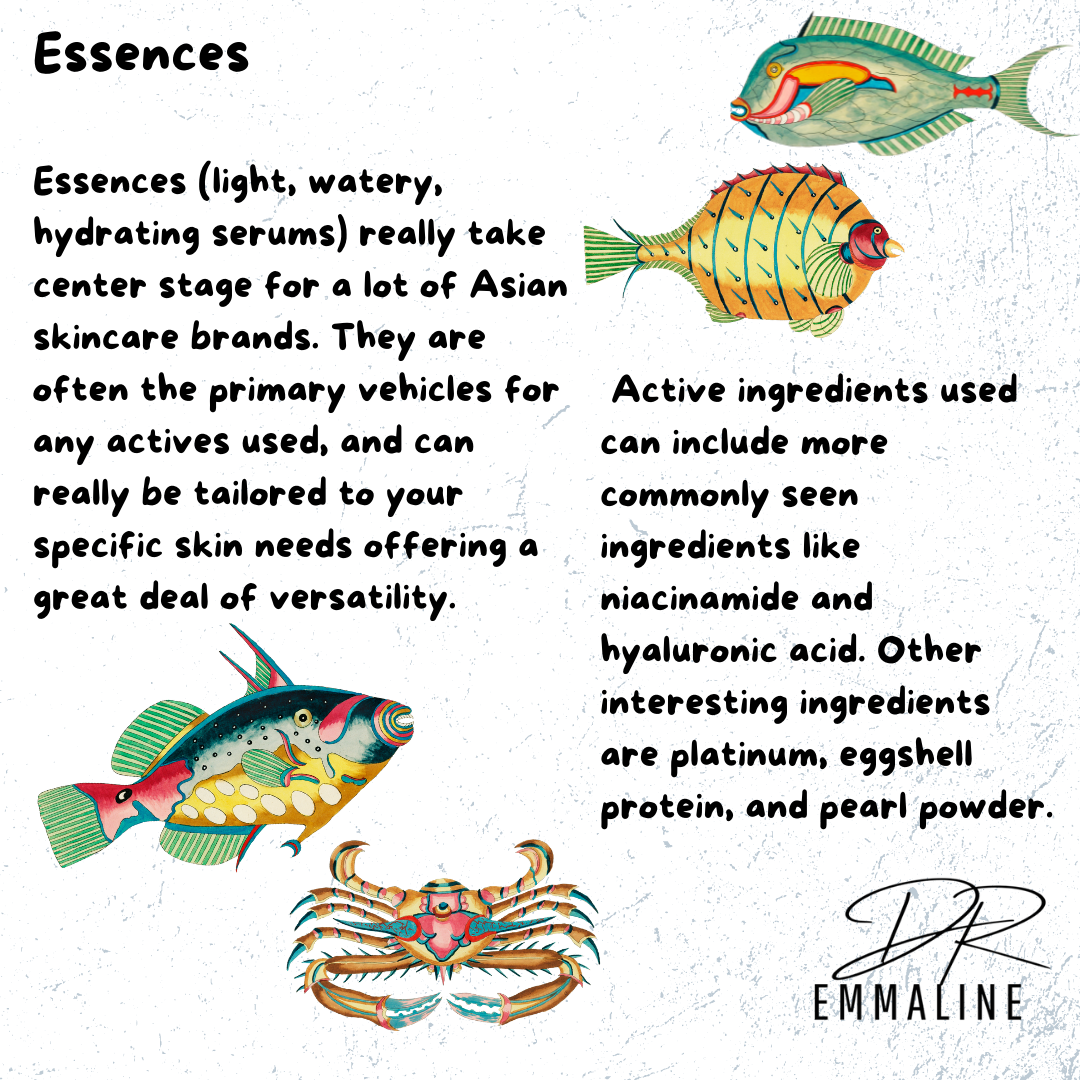
Pearl Powder

Snail Mucin

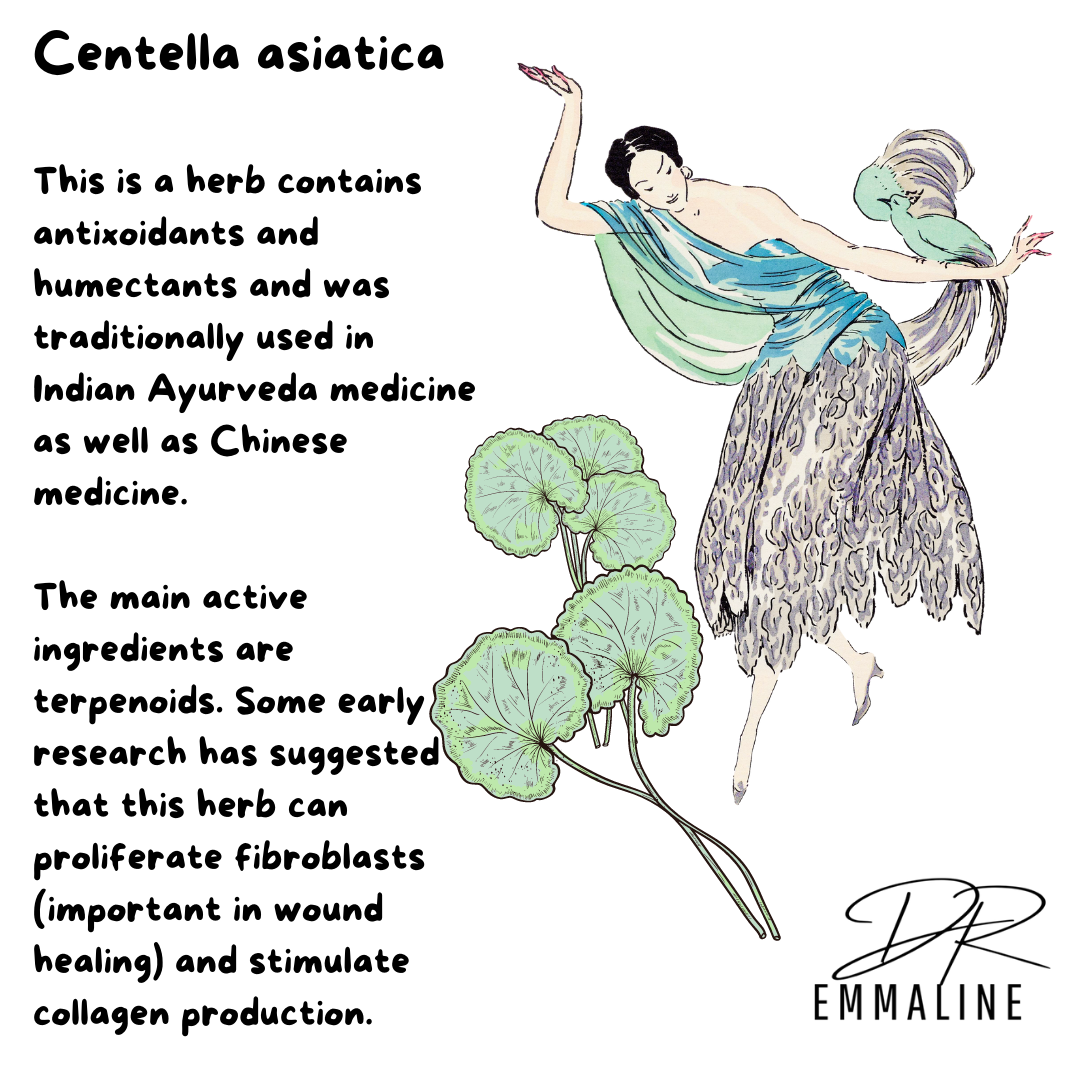
Centella Asiatica
Bamboo Extract & Soy

Orchid & Rice Water

Green Tea

Propolis


References
Bylka W, Znajdek-Awiżeń P, Studzińska-Sroka E, Brzezińska M. Centella asiatica in cosmetology. Postepy Dermatol Alergol. 2013 Feb;30(1):46-9. doi: 10.5114/pdia.2013.33378. Epub 2013 Feb 20. PMID: 24278045; PMCID: PMC3834700.
Hu S, Wolfe S, Laughter MR, Sadeghpour M. The Use of Botanical Extracts in East Asia for Treatment of Hyperpigmentation: An Evidenced-Based Review. J Drugs Dermatol. 2020 Jul 1;19(7):758-763. doi: 10.36849/JDD.2020.4776. PMID: 32726104.
Kurek-Górecka A, Górecki M, Rzepecka-Stojko A, Balwierz R, Stojko J. Bee Products in Dermatology and Skin Care. Molecules. 2020 Jan 28;25(3):556. doi: 10.3390/molecules25030556. PMID: 32012913; PMCID: PMC7036894.
Loh, Xian Jun et al. “Pearl Powder-An Emerging Material for Biomedical Applications: A Review.” Materials (Basel, Switzerland) vol. 14,11 2797. 24 May. 2021, doi:10.3390/ma14112797.
McDermott, Maxwell et al. “Advancing Discovery of Snail Mucins Function and Application.” Frontiers in bioengineering and biotechnology vol. 9 734023. 11 Oct. 2021, doi:10.3389/fbioe.2021.734023
Quay ER, Chang YC, Graber E. Evidence for Anti-Aging South Korean Cosmeceuticals. J Drugs Dermatol. 2017 Apr 1;16(4):358-363. PMID: 28403270.

Let's start with a phrase you've said a hundred times without thinking about it: "mad as a hatter."
It isn't just a bit of whimsy from Alice in Wonderland. For centuries, hat-makers used mercury to turn animal fur into felt — and breathing its fumes, day after day, in poorly-ventilated workshops slowly poisoned them. The result was a syndrome doctors called erethism: tremors (the "hatter's shakes"), crippling anxiety and irritability, memory loss, personality change. An entire trade was, quite literally, being driven mad by a heavy metal. Mercury is a spectacular poison — it wrecks the kidneys and the nervous system — and we have known this for a very, very long time.
Which makes what I'm about to tell you all the more depressing. Because mercury didn't just disappear when the hat factories shut down. Today, it's in skin-lightening creams — and it's still poisoning people, right now, in 2026.